

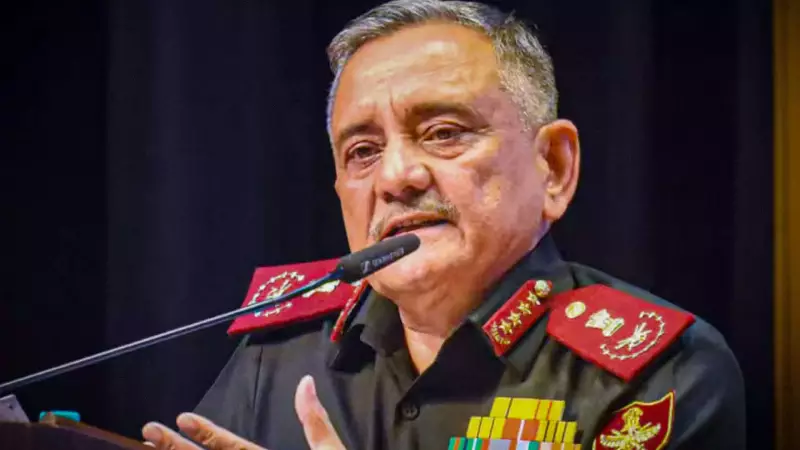
India's Chief of Defence Staff (CDS), General Anil Chauhan, has issued a stark and clear-eyed evaluation of the nation's strategic defence requirements. He stated that India must develop the capability to engage in two distinct types of warfare: swift, high-intensity counter-terror operations and extended, land-centric conflicts stemming from territorial disputes.
The Dual Reality of Modern Threats
Speaking on December 23, 2025, General Chauhan emphasized that the security landscape demands a dual-preparedness approach. On one front, the military must be ready for short-duration, high-intensity conflicts aimed at deterring and punishing terrorism. He cited Operation Sindoor, launched after the devastating Pahalgam terror attack, as a prime example of this kind of response.
Simultaneously, he cautioned that India must remain prepared for the possibility of prolonged wars, which are more likely to arise from longstanding territorial disagreements with adversaries. This dual reality forms the core of India's contemporary strategic challenge.

Convergence of Six Domains in Warfare
General Chauhan pointed out that modern battles are no longer confined to a single sphere like land or sea. Today, conflicts see the simultaneous convergence of six critical domains:
- Land
- Air
- Sea
- Cyber
- Space
- Cognitive Warfare
This multi-domain environment necessitates faster decision-making cycles and tighter integration of command structures across the army, navy, and air force to achieve decisive effects.
Persistent Grey-Zone Threats and Asymmetric Advantage
The CDS warned that terrorism and grey-zone warfare—aggressive actions that fall short of open war—will continue to be persistent threats. To effectively counter these, India must learn to create and leverage asymmetrical advantages against weaker opponents.
However, he added a crucial caveat: these tactical advantages must be secured in a manner that prevents them from being exploited or neutralized by other, more powerful adversaries in the strategic arena.
General Chauhan concluded with a forward-looking observation, stating that the world is on the cusp of a third revolution in military affairs. This revolution is fundamentally reshaping doctrines, technologies, and the very understanding of how future wars will be fought and won. India's military modernization and jointness efforts are steps to navigate this new era of conflict.






