

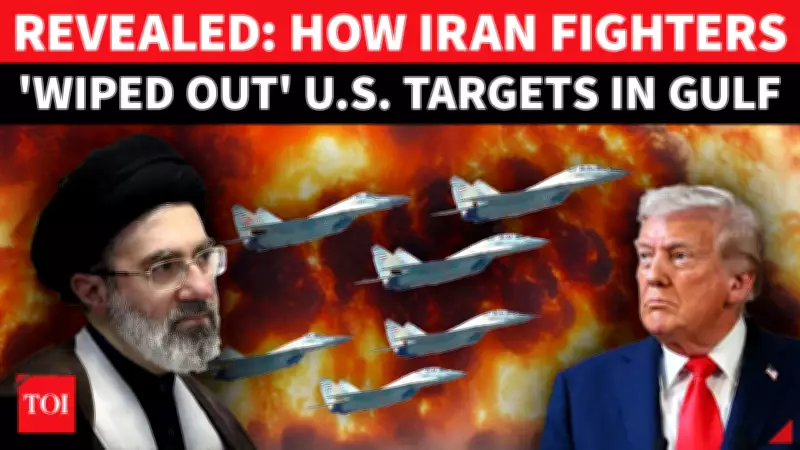
Iran's military has revealed dramatic details of its opening air operations in the ongoing US-Israeli war, underscoring Tehran's message that the conflict is 'far from over.' According to Iranian Army spokesperson Brigadier General Mohammad Akraminia, fighter jets including F-5 aircraft carried out multiple sorties early in the war, striking what Tehran described as hostile bases in regional countries such as Erbil in Iraq, Kuwait, and Qatar in operations that penetrated advanced US-designed air defence layers.
Details of the Air Operations
The Iranian Air Force breached Gulf airspace to bombard US bases in three countries with F-series jets. The operations targeted facilities in Iraq, Kuwait, and Qatar, demonstrating Tehran's capability to project power across the region. Brigadier General Akraminia stated that the strikes were precise and achieved their objectives, though he did not provide specific damage assessments.
Strategic Implications
The revelation comes as US President Donald Trump claimed victory against Tehran, but Iran insists the war is not over. The Iranian military has identified new targets and remains prepared for further operations. The use of F-5 jets, an older US-designed aircraft, highlights Iran's ability to maintain and deploy its air force despite decades of sanctions.

Regional Reactions
Iran's operations have drawn sharp responses from the US and its allies. The Pentagon has not officially commented on the breaches, but sources indicate that US air defenses were challenged. Meanwhile, regional countries like Kuwait and Qatar have expressed concern over the escalation. The Houthis in Yemen have also drawn a red line, warning the US over the Strait of Hormuz and expressing solidarity with Iran, Palestine, and Lebanon.
In other developments, Iran's Islamic Revolutionary Guard Corps (IRGC) reportedly recovered an intact US GBU-57 bunker buster for reverse engineering, potentially bolstering Tehran's military capabilities. Pentagon generals have issued a blunt warning about gaps in the US missile shield, acknowledging that there is no defense against hypersonic weapons.






