

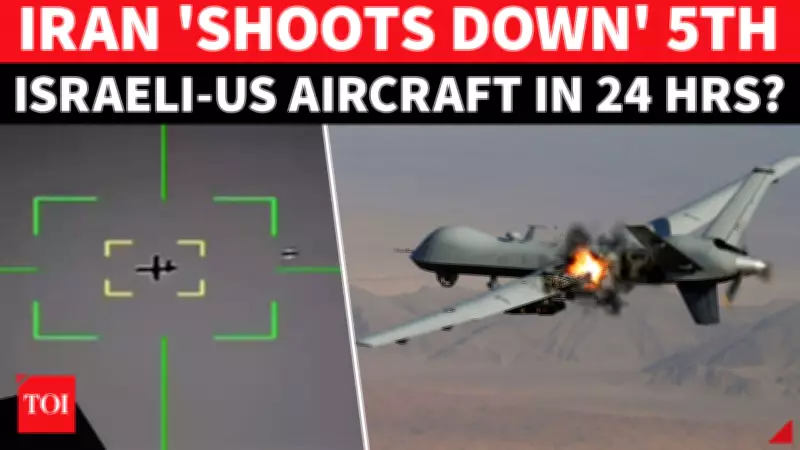
Iran Claims Major Hit: Reports U.S. MQ-1 Drone Shot Down Over Isfahan
In a significant escalation of the ongoing Middle East conflict, Iran has claimed that its Islamic Revolutionary Guard Corps (IRGC) air defence systems successfully shot down a U.S. MQ-1 drone over the city of Isfahan. This bold assertion, reported on April 4, 2026, marks another dangerous turn in the intensifying air war between the two nations.
Escalating Tensions and Conflicting Claims
The Iranian claim follows earlier reports of Iranian forces allegedly downing U.S. warplanes near the strategic Strait of Hormuz, a critical global oil shipping route. Meanwhile, Israel has announced that it carried out targeted strikes on Iranian military installations in Tehran, specifically aiming at air defence systems and missile facilities. These developments indicate that both sides are ramping up their military operations and rhetoric, pushing regional tensions to perilous new heights.
No independent verification has yet confirmed the Iranian claims regarding the downed U.S. drone. However, the situation undeniably signals a rapidly intensifying air conflict that could have far-reaching geopolitical implications. The lack of third-party confirmation adds a layer of uncertainty to an already volatile scenario.

Broader Context of the Conflict
The reported drone incident over Isfahan occurs against a backdrop of heightened military activity across the region. Iranian officials have previously made claims about intercepting multiple enemy aircraft, including assertions of downing Israeli F-16 fighter jets and American stealth F-35s and Black Hawk helicopters. These claims, often accompanied by dramatic language about "black days" for opposing air forces, contribute to an atmosphere of escalating confrontation.
Israeli strikes on Iranian military targets in Tehran represent a direct challenge to Iran's defensive capabilities. By targeting air defence systems and missile facilities, Israel appears to be attempting to degrade Iran's ability to respond to future attacks, potentially setting the stage for further escalation.
Regional and Global Implications
The conflict between Iran, the United States, and Israel has significant implications for regional stability and global security. Key aspects include:
- Strategic waterways: The Strait of Hormuz remains a flashpoint, with Iran previously threatening to close this vital shipping lane.
- Proxy conflicts: Groups like Hezbollah, allegedly using Russian drone technology against Israel, add complexity to the battlefield.
- Economic impact: Previous Iranian claims of destroying over $1 billion worth of U.S. AWACS aircraft highlight the potential economic costs of the conflict.
- Diplomatic tensions: Iran has rejected what it calls "fake" ceasefire claims, indicating diplomatic solutions remain elusive.
As both sides continue to exchange claims and counter-claims, the situation remains fluid and dangerously unpredictable. The international community watches closely, concerned about the potential for miscalculation that could lead to broader regional war.






