

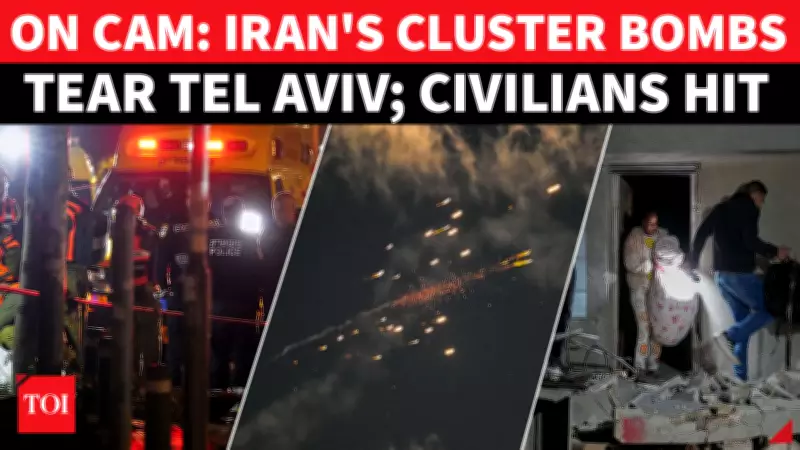
Iran Escalates Missile Campaign with Deadly Cluster Bomb Strike on Israel
In a significant escalation of hostilities, Iran has intensified its missile campaign against Israel, launching a deadly strike using cluster munitions that resulted in civilian casualties and widespread damage. The attack, which occurred on March 28, 2026, marks a continuation of Tehran's sustained barrage that began in late February, targeting populated areas in central Israel.
Civilian Casualties and Structural Damage Reported
The cluster bomb barrage killed at least one civilian and injured several others, as confirmed by emergency services. The bomblets scattered across multiple impact sites, causing structural damage to buildings and infrastructure. Sirens blared across cities including Tel Aviv and Beersheba, leading to panic and disruption among residents.
Emergency responders worked tirelessly to assess the damage and provide aid to those affected. The use of cluster munitions, which are designed to disperse smaller explosives over a wide area, has raised concerns about the potential for further harm in densely populated regions.

Context of Sustained Barrage and Regional Tensions
This attack is part of a broader pattern of Iranian aggression, with Tehran maintaining a consistent missile campaign against Israel since late February. The strike comes amid heightened regional tensions, as evidenced by related developments:
- Former U.S. President Donald Trump commented on the situation, suggesting Iran is "begging" for a deal as strikes intensify.
- U.S. Senator Marco Rubio claimed that the Iran war is nearing an end without an immediate ground invasion.
- U.S. Senator Welch criticized Trump over a $200 billion push related to Iran, stating there is "no strategy."
- The U.S. confirmed that 300 soldiers have been injured in Iran attacks across the Middle East since the war began.
These events highlight the complex geopolitical landscape, with Iran expanding its war zone and threatening U.S. infrastructure after Israel bombed nuclear sites. Reports indicate that Iran's IRGC missile arsenal remains largely intact, with only one-third wiped out, and Iran has ordered Chinese ships to return despite promises of safe passage.
International Reactions and Broader Implications
In a shocking move, Iran also hit Saudi capital Riyadh with a missile storm, following pressure from Saudi Crown Prince Mohammed bin Salman on Trump to escalate actions. Additionally, Russia confirmed arms supply to the Iranian army, warning that "Iran knows where American bases are," further complicating the conflict.
The attack underscores the volatile nature of the Middle East, with cluster munitions posing a severe threat to civilian safety. As Israel and its allies respond, the international community watches closely, with debates over funding and strategy ongoing in U.S. political circles.






