The Iran war has evolved from a direct military confrontation into a wider regional and economic crisis, with diplomacy and military brinkmanship now unfolding in parallel.
The conflict began with coordinated US-Israeli strikes on Iranian military and strategic targets, triggering retaliation from Tehran and setting off weeks of missile exchanges, aerial operations and maritime disruption. Iran responded with strikes targeting US-linked assets and regional sites, while allied groups in the region added to the volatility.
Strait of Hormuz Disruption
One of the most significant consequences of the conflict has been the disruption in the Strait of Hormuz, a critical global energy chokepoint through which roughly a fifth of the world's oil trade typically passes. Iran tightened oversight over vessel movement, introducing permit and coordination requirements that sharply reduced shipping traffic and raised concerns over energy supply and freight costs.

US Response and Dual-Track Approach
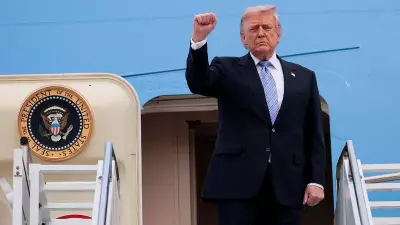
The United States responded with a military buildup in the region and attempted measures to secure maritime passage, while also pursuing negotiations to avoid wider escalation. US President Donald Trump signalled both readiness for tougher military action and openness to diplomacy, reflecting Washington's dual-track approach.
Economic Implications
The conflict has also had significant economic implications. Oil prices surged amid fears of prolonged supply disruption, insurers raised risk premiums for vessels transiting the Gulf, and governments began contingency planning for energy security. Diplomatic activity has intensified in recent weeks, with reports of backchannel talks and mediation efforts involving Gulf states and other intermediaries. However, while periods of reduced military activity have eased immediate fears of escalation, a durable political settlement remains elusive.
Current Situation
Israel has continued to maintain military pressure in parts of the region, while Iran has used the maritime front as leverage in negotiations. The resulting situation is less a clean ceasefire than a tense pause shaped by deterrence, economic pressure and strategic signalling.
For countries such as India, the conflict has implications beyond geopolitics. Energy prices, shipping routes, insurance costs and supply chains remain directly exposed to developments in the Gulf.
As things stand, the conflict has shifted from an intense battlefield confrontation to a prolonged strategic contest — one that now spans diplomacy, trade, shipping and regional security.