

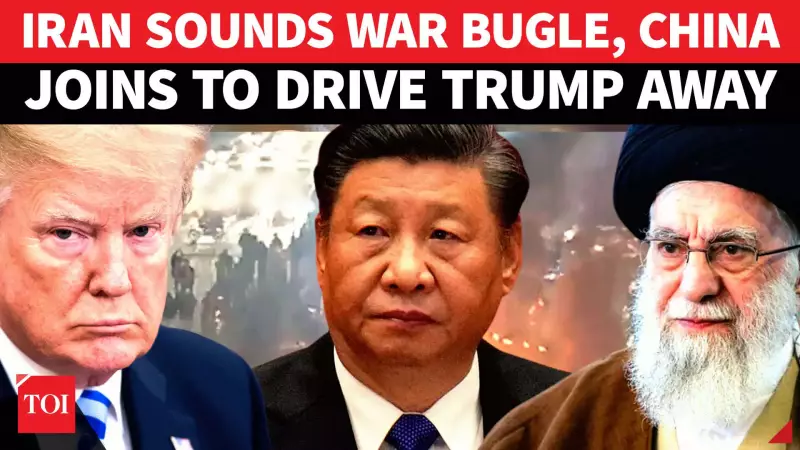
Iran is engulfed in a severe and bloody internal crisis, with nationwide protests against the government turning increasingly violent. The death toll has surged past 500 people, according to reports, sparking intense international condemnation and raising fears of a broader geopolitical confrontation.
Violence Erupts Across Iran
The protests, which appear to be some of the most significant challenges to the Iranian leadership in recent years, have seen shocking levels of violence. Disturbing videos circulating online show rioters setting a police officer on fire, while terrified protesters have been filmed appealing directly to former US President Donald Trump for intervention. Inside the Iranian parliament, lawmakers were seen chanting "Allahu Akbar" and "Death to America," with the speaker launching a verbal attack on Trump, highlighting the deep-seated animosity.
International Backlash and Warnings
The international response has been swift and severe. Key NATO nations including the United Kingdom, France, and Italy have expressed outrage, with reports stating their "blood boils" over the regime's crackdown. Former President Donald Trump issued a stark warning to Supreme Leader Ayatollah Ali Khamenei, accusing him of "crossing a red line" and hinting at potential military action by suggesting US troops could storm Iran. This rhetoric has added a dangerous new dimension to the crisis.

Simultaneously, Trump's focus also turned to NATO's northern flank, where he reportedly lost his cool during discussions about the defence of Greenland. He mocked the alliance's capabilities there, referencing "two dog sleds," and warned that rivals like Vladimir Putin and Xi Jinping could take over the Arctic island. In response, NATO reportedly plans to send troops to "storm" the Arctic Island to reinforce its position, signalling a wider strategic posturing beyond the Middle East.
Global Ripples and Alignments
The unrest in Iran is creating ripple effects globally, influencing other international alignments. Chinese President Xi Jinping has thrown his political weight behind Somalia, a move analysts see as a direct challenge to US influence, especially following actions by Trump's ally, Israel. This indicates how regional crises are becoming flashpoints in the larger US-China rivalry.
Back in the United States, the tension has spilled onto American streets. At an anti-Khamenei rally in Los Angeles, protesters attacked a truck that ploughed into the demonstration, with videos showing the driver being punched. Furthermore, domestic law enforcement actions, such as ICE agents firing sting balls and storming homes in Minnesota, have added a layer of internal discord, with Trump publicly clearing an ICE agent while blaming "violent & radical" elements for the violence.
The situation remains fluid and extremely volatile. With a soaring death toll inside Iran, escalating rhetoric from world powers, and strategic manoeuvres from global rivals, the crisis threatens to destabilise the region further and test the limits of international diplomacy. The world watches anxiously as events continue to unfold.






