

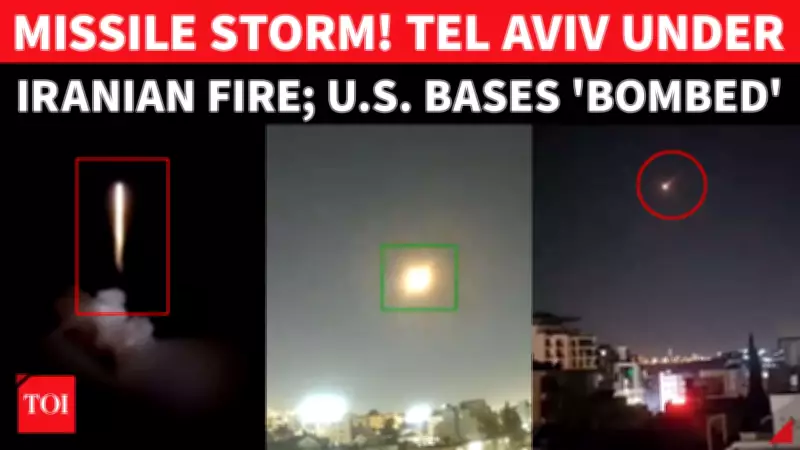
Iranian Revolutionary Guard Launches Major Missile Barrage Against Israeli and American Targets
In a significant escalation of hostilities, Iran's Islamic Revolutionary Guard Corps (IRGC) has claimed responsibility for a series of missile attacks targeting both Israeli cities and United States military installations across the Middle East. The IRGC announced it executed "direct hits" using its advanced Khoramshahr super-heavy missiles, marking a new and dangerous phase in the regional conflict.
Targets and Claims of the Iranian Assault
According to official statements from Tehran, the missile waves were precisely aimed at several key locations. The primary Israeli urban centers targeted included:
- Haifa, a major port city in northern Israel.
- Tel Aviv, the country's economic and cultural heart.
- Jerusalem, a city of profound historical and political significance.
Simultaneously, the IRGC asserted strikes on American military assets, specifically naming:

- US bases located in Erbil, within the Kurdistan Region of Iraq.
- American facilities in Bahrain, a key ally hosting the US Navy's Fifth Fleet headquarters.
Israeli Response and Confirmation of Attacks
The Israeli military confirmed the launch of multiple missiles from Iranian territory. Air raid sirens were activated across central and northern regions of Israel, prompting civilians to seek shelter. Israeli defense systems, including the Iron Dome and other aerial defense networks, were reportedly engaged, with military officials stating that "the majority of the incoming projectiles were successfully intercepted."
In a swift and decisive countermove, the Israel Defense Forces (IDF) announced retaliatory strikes. These operations targeted Iranian command centers and security facilities, aiming to degrade Tehran's military capabilities and command structure. The exchange represents a tit-for-tat escalation that risks spiraling into a broader confrontation.
Rising Tensions and Regional Implications
This latest round of attacks and counterattacks has dramatically intensified the already volatile situation in the Middle East. The direct strikes by Iran on Israeli soil and US bases signify a bold and aggressive posture from Tehran, moving beyond proxy warfare. Analysts warn that the situation is perilously close to triggering a wider regional war, with potential implications for global oil markets, international diplomacy, and regional stability.
The international community is watching with growing concern as both sides appear to be locked in a cycle of retaliation. The attacks underscore the fragile security architecture of the Middle East and the high stakes involved for all regional actors and their global allies.






