

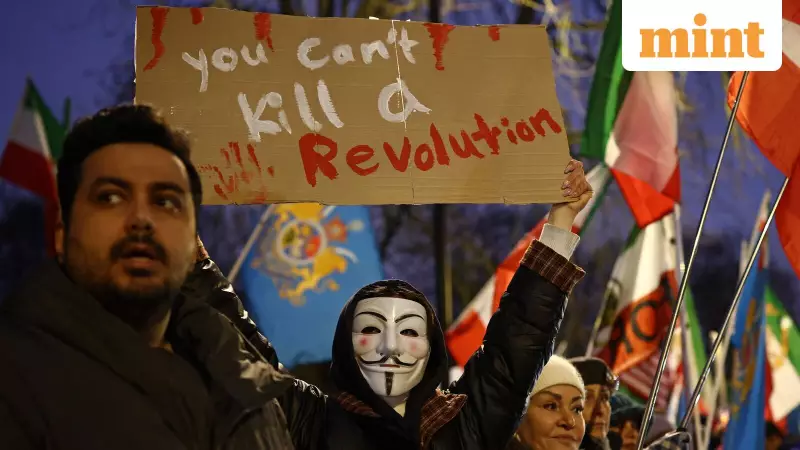
Protests across Iran have now persisted for two full weeks, reaching a critical juncture on Saturday, January 9. The Iranian government, while acknowledging the ongoing demonstrations, has intensified its crackdown, leading to significant arrests and a rising death toll. The nation remains largely isolated from the international community amidst the turmoil.
Escalating Crackdown and Rising Casualties
National police chief Ahmad-Reza Radan confirmed on state television that authorities have arrested key figures in the protest movement. "Significant arrests were made of the main elements in the riots," Radan stated, adding they would face punishment after legal procedures.
According to the US-based Human Rights Activists News Agency, the human cost is severe. The death toll has climbed to 116, with most victims shot by live ammunition or pellet guns. The organisation also reported that 2,638 people have been detained. Among the dead are medical personnel, and tragically, seven victims were under 18 years old.

Economic Grievances Spark Political Revolt
The unrest began on December 28, initially triggered by the collapse of the Iranian Rial, which has plummeted to over 1.4 million to one US dollar. Economic hardships, exacerbated by international sanctions linked to Iran's nuclear programme, fuelled public anger. However, the demonstrations have since evolved into a direct challenge against the country's theocratic government.
The protests gained momentum following calls from Reza Pahlavi, the exiled son of Iran's former shah, who urged citizens to occupy city centres and organise strikes in vital sectors. Saturday marked the third consecutive night of large-scale nationwide demonstrations.
International Tensions and Threats of War
The situation has drawn sharp international reactions and threats. Former US President Donald Trump warned the Iranian regime against firing on protesters and tweeted that the US "stands ready to help!!!" Reports suggest Trump was briefed on new military strike options.
In response, Iranian officials issued stark warnings. Parliament Speaker Mohammad Bagher Ghalibaf declared that US military and shipping centres, as well as "occupied territories"—a clear reference to Israel—would be legitimate targets if the US attacks. He emphasised Iran's right to preemptive action against perceived threats.
Foreign Minister Abbas Araghchi accused the US and Israel of inciting violent unrest. The attorney general, Mohammad Movahedi Azad, escalated the domestic threat by labelling protesters as "enemy of God," a charge that carries the death penalty, extending even to those who aid demonstrators.
While the US military asserts it is "postured" with full combat capabilities in the region, and Israel is monitoring the situation closely, the ultimate decision for any Iranian military action rests with Supreme Leader Ayatollah Ali Khamenei.
Protests Continue in Key Cities
Despite the crackdown, protests flared in major cities. Online footage from northern Tehran's Punak neighbourhood showed protesters with lit mobile phones, blocked roads, and the sound of metal being pounded. In Mashhad, Iran's second-largest city and home to a major Shiite shrine, videos allegedly depicted clashes between security forces and demonstrators, underscoring the profound challenge to the regime.
With exiled leader Reza Pahlavi calling for continued protests through Sunday, urging the display of pre-revolutionary symbols, the standoff shows no signs of immediate resolution.






