Iran has been gripped by a wave of violent anti-government protests for eleven consecutive days, with clashes between demonstrators and security forces intensifying across the nation. The unrest, initially sparked by a severe economic crisis, has now spread to a vast number of urban centres, marking one of the most significant challenges to the establishment in recent years.
Nationwide Clashes and Viral Confrontations
On Wednesday, violent confrontations erupted in several locations. Social media videos depicted tense stand-offs, with the sound of gunfire echoing in the background. In footage from multiple areas, security forces were seen firing guns and tear gas at crowds of protesters, some of whom retaliated by throwing stones.
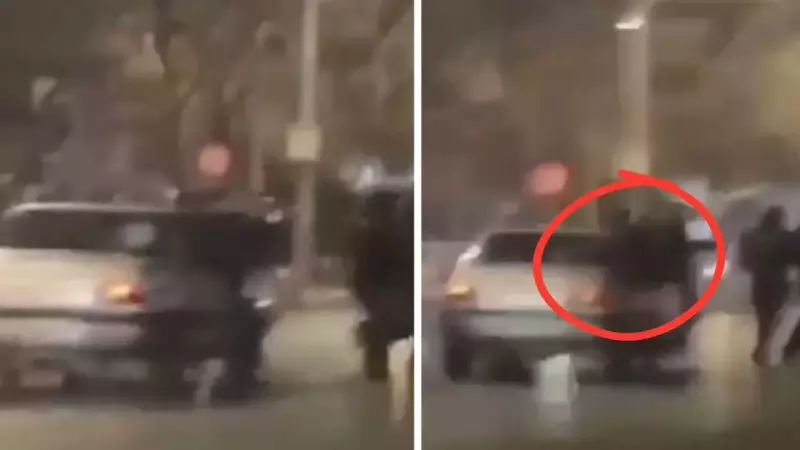
One particularly viral video from the city of Mashhad showed a dramatic moment where a protester drove a car into a group of security personnel. In a separate incident reported by Iran's semi-official Fars news agency, which is close to the Revolutionary Guards, two policemen were shot and killed in the south-western town of Lordegan. The agency identified the officers as Hadi Azarsalim and Moslem Mahdavinasab, claiming they were killed by "armed individuals" among a group it labelled as "rioters".

Scale of the Protests and Casualty Figures
The scale of the demonstrations is extensive. According to the US-based Human Rights Activist News Agency (HRANA), the protests have spread to 111 cities and towns across all 31 provinces of Iran. The agency reported that at least 34 protesters and four security personnel have been killed in the unrest. Furthermore, it stated that approximately 2,200 protesters have been arrested.
BBC Persian has independently confirmed the deaths and identities of 21 individuals. Iranian authorities, for their part, have acknowledged the deaths of five security force members. The disparity in figures highlights the challenges in verifying information from within the country.
Economic Grievances Fuel Widespread Anger
The protests began on 28 December, when shopkeepers in the capital, Tehran, took to the streets. Their immediate anger was directed at another sharp depreciation of the Iranian rial against the US dollar on the open market. This was merely the trigger for deeper, widespread economic frustration.
Over the past year, the rial has sunk to a record low and inflation has soared to 40%. This economic stranglehold is a result of sanctions re-imposed over Iran's nuclear programme, compounded by long-standing issues of government mismanagement and corruption. The economic pressure has severely squeezed the livelihoods of ordinary Iranians.
What started as merchant demonstrations quickly evolved. University students joined the movement, and it rapidly spread to other cities. In crowds across the nation, protesters have been heard chanting slogans directly against the country's Supreme Leader, Ayatollah Ali Khamenei. Some demonstrations have also featured chants in support of Reza Pahlavi, the exiled son of Iran's late former shah, indicating a breadth of dissent.
The continuation of protests into an eleventh day, despite a harsh response from security forces, signals a profound level of public discontent. The situation remains fluid, with the economic roots of the crisis showing no signs of immediate resolution, suggesting the potential for further instability.