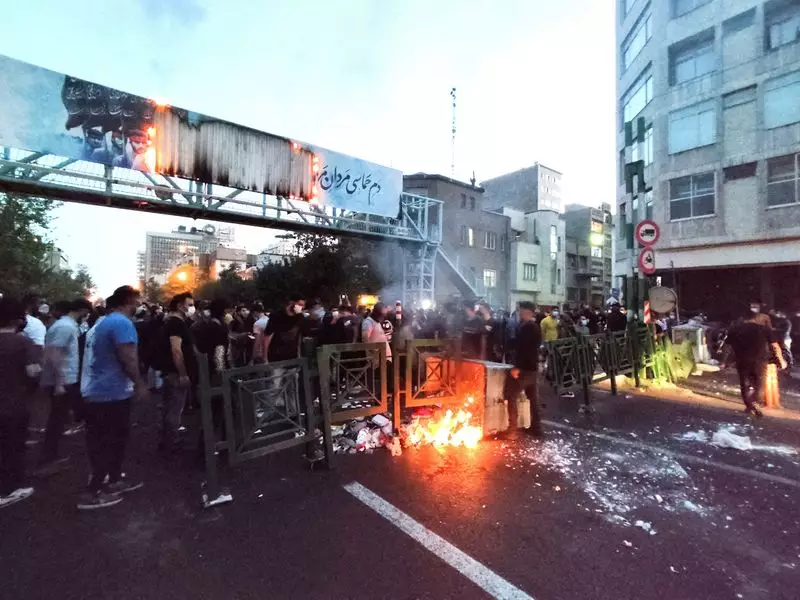
The death toll from the ongoing protests in Iran has risen sharply to at least 420 people, according to a report by a leading human rights organization based within the country. The protests, which were triggered by the death of a young woman in police custody, have evolved into one of the most significant challenges to Iran's leadership in recent years.
Escalating Violence and Nationwide Unrest
The human rights group, the Iran Human Rights (IHR) organization based in Oslo, provided the updated figure. They stated that the number of people killed has increased significantly since their last report. The protests erupted in mid-September after 22-year-old Mahsa Amini died on September 16. She was detained by the country's morality police for allegedly violating Iran's strict dress code.
What began as outrage over her death quickly transformed into widespread demonstrations calling for greater freedoms and women's rights. These protests have seen people from all walks of life, including students, taking to the streets across dozens of cities. The authorities have responded with a severe crackdown, deploying security forces, making mass arrests, and restricting internet access to curb the flow of information.

Detailed Breakdown of Casualties and Arrests
The IHR report offers a grim breakdown of the casualties. Among the 420 confirmed deaths are 57 children and 29 women. The province of Sistan-Baluchistan, a predominantly Sunni region in southeastern Iran, has witnessed some of the deadliest violence. A particularly bloody incident occurred in Zahedan on September 30, which activists have labeled "Bloody Friday," where security forces reportedly opened fire on protesters after Friday prayers.
Beyond the fatalities, the scale of arrests is immense. Iranian officials themselves have acknowledged detaining thousands, though independent estimates suggest the number is far higher. Many of those arrested face serious charges, and there are growing concerns about their treatment and the fairness of any trials.
International Reaction and Mounting Pressure
The international community has reacted with increasing alarm to the situation in Iran. Several Western nations, including the United States and members of the European Union, have imposed sanctions on Iranian officials and entities linked to the crackdown. The United Nations Human Rights Council recently voted to establish a fact-finding mission to investigate alleged abuses, a move strongly opposed by Tehran.
Despite the pressure, Iranian authorities have remained defiant. They have blamed foreign powers and "terrorists" for instigating the unrest and have vowed to deal decisively with what they call "riots." State media largely portrays the protests as limited and driven by external forces, contradicting footage and reports circulating on social media and through activist networks.
The protest movement, symbolized by the slogan "Woman, Life, Freedom," shows no immediate signs of abating, even in the face of severe repression. The rising death toll underscores the high stakes of this ongoing struggle for change within the Islamic Republic. The world continues to watch as events unfold, with human rights groups urging for an immediate end to the violence and accountability for the lives lost.