

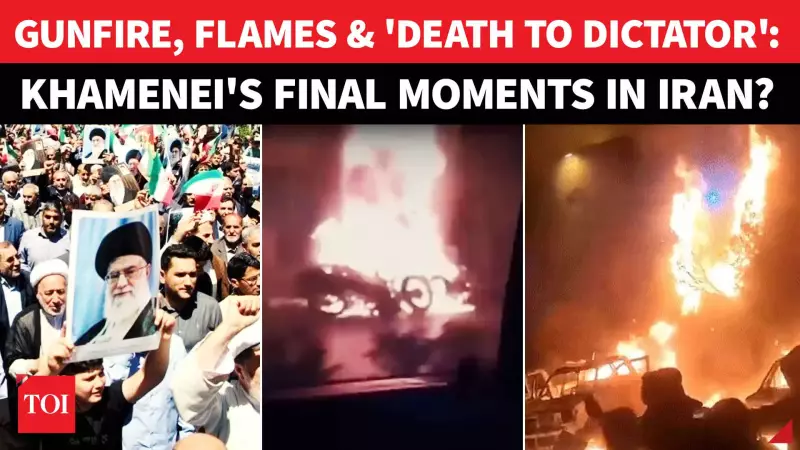
For the 13th consecutive day, Iran has been gripped by massive nationwide protests that have evolved from demonstrations over economic hardship into a direct and open challenge to the country's supreme leader, Ayatollah Ali Khamenei, and the entire clerical establishment. The unrest, which began on January 10, 2026, has intensified dramatically, with shocking videos emerging from the capital showing streets in flames and the sound of gunfire echoing through multiple cities.
Nationwide Defiance Amid Internet Blackout
Despite a sweeping government-imposed internet blackout designed to stifle communication and organisation, protesters have taken to the streets in huge numbers. From the iconic Kaj Square in Tehran to major urban centres like Amol, Esfahan, Tabriz, and Mashhad, citizens have defied the crackdown. They have been heard chanting slogans directly against Supreme Leader Khamenei, setting government buildings ablaze, and engaging in fierce clashes with security forces.
The scale of the mobilisation was amplified by calls from Reza Pahlavi, the exiled former crown prince of Iran, for a coordinated nationwide protest at a specific hour. Millions reportedly heeded this call, gathering simultaneously across the country. In response, authorities have doubled down, imposing severe telecom shutdowns and intensifying their security crackdown. According to international human rights groups, the toll has been heavy: at least 51 protesters have been killed and more than 2,000 have been arrested since the demonstrations began.

International Reactions and Accusations
The escalating crisis has drawn sharp reactions from the international community, most notably from the United States. U.S. President Donald Trump has issued fresh warnings, stating that Washington is closely monitoring the situation in Iran. The U.S. State Department followed with a stern caution to Tehran, advising the regime not to test American resolve.
Iran, however, has taken a defensive and accusatory stance on the global stage. The government has formally lodged complaints with the United Nations, accusing the United States of instigating and fuelling what it describes as "violent subversive acts" within its borders. This exchange highlights the deep-seated geopolitical tensions that are now intersecting with the domestic uprising.
A Regime at a Crossroads?
With fires lighting up the night in Tehran, gunfire reported from several urban centres, and mounting pressure both domestically and internationally, a critical question now looms over the Islamic Republic. The protests represent the most significant direct challenge to the system since the 1979 Revolution. Analysts and observers worldwide are asking: Is Ayatollah Khamenei losing his grip on power? The sustained, widespread nature of the unrest, targeting the core of the clerical leadership, suggests Iran may be standing at the precipice of a historic political rupture. The coming days will be crucial in determining whether the regime can reassert control or if the protest movement will forge a new path for the nation.






