

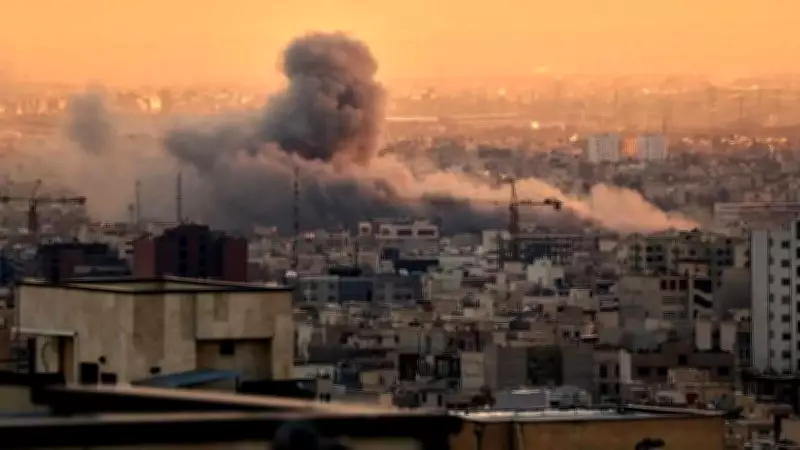
Iran Targets Israel's Nuclear Infrastructure as War Enters Day 27
The ongoing conflict between Israel and Iran has reached a critical juncture on its 27th day, marked by significant military escalation and intensified diplomatic maneuvering. Iran's Islamic Revolutionary Guard Corps (IRGC) has claimed responsibility for launching wave 82 of its operation against Israel, specifically targeting military command centers and industries linked to Israel's nuclear infrastructure near the Dead Sea. This represents a sharp escalation in Tehran's public messaging as regional tensions continue to mount.
Gulf States Demand Inclusion in Negotiations
The Gulf Cooperation Council (GCC) has taken a firm public stance, insisting that Gulf states must be included in any US-Iran negotiations or agreements. Secretary General Jasem AlBudaiwi emphasized that the conflict now poses a direct threat to Gulf security, international shipping, and the global economy. In a significant accusation, AlBudaiwi claimed Iran is forcing vessels to pay fees for safe transit through the strategically vital Strait of Hormuz, which historically handled approximately 20% of global oil and gas flows.
Diplomatic Channels Active Through Pakistan
On the diplomatic front, Pakistan Foreign Minister Ishaq Dar has publicly confirmed that indirect contacts between the United States and Iran are underway through Islamabad. Dar clarified that while formal "peace talks" are not occurring, messages are being relayed between the two nations, with a 15-point US proposal currently under Iranian consideration. Turkey and Egypt are supporting this diplomatic initiative, while China has expressed cautious optimism about potential progress.

Military Escalation Continues Unabated
The battlefield remains highly volatile despite diplomatic efforts. Israel reported killing IRGC Navy commander Alireza Tangsiri in an airstrike and launching fresh strikes in Isfahan. Iranian missile attacks wounded six people in Israel. In a tragic development highlighting the conflict's regional spillover, two people were killed in Abu Dhabi when debris fell following the successful interception of a ballistic missile by UAE air defenses. The Abu Dhabi Media Office confirmed the incident occurred on Sweihan Street.
Regional and Global Consequences Deepen
The war's impact continues to expand across multiple dimensions:
- Human Toll: Iranian health officials report at least 1,937 deaths inside Iran since the conflict began, including 240 women and 212 children, with more than 24,800 wounded.
- Economic Impact: Brent crude oil remains above $100 per barrel, prompting emergency responses including South Korea's $17 billion "wartime" budget.
- International Involvement: Ukrainian President Volodymyr Zelenskyy revealed that Ukrainian teams are assisting Middle Eastern countries with counter-drone efforts, while the US considers various military options against Iran.
- Political Pressure: Former US President Donald Trump has intensified rhetoric, criticizing NATO's response and warning Iran to "get serious soon" in ongoing discussions.
Defensive Measures and Regional Preparedness
The UAE Ministry of Defense reported that since the beginning of what it termed "blatant Iranian aggression," UAE air defenses have intercepted 357 ballistic missiles, 15 cruise missiles, and 1,815 drones. The ministry emphasized continued readiness to counter further threats. Meanwhile, Hezbollah has vowed continued confrontation with Israel, and an Israeli soldier was killed in fighting in southern Lebanon, indicating the conflict's expansion beyond the immediate Israel-Iran theater.
As diplomatic efforts intensify through multiple channels, the war remains deeply unstable with significant implications for regional security, global energy markets, and international relations. The combination of military escalation and diplomatic signaling creates a fragile environment where both conflict and potential resolution remain possible outcomes.






