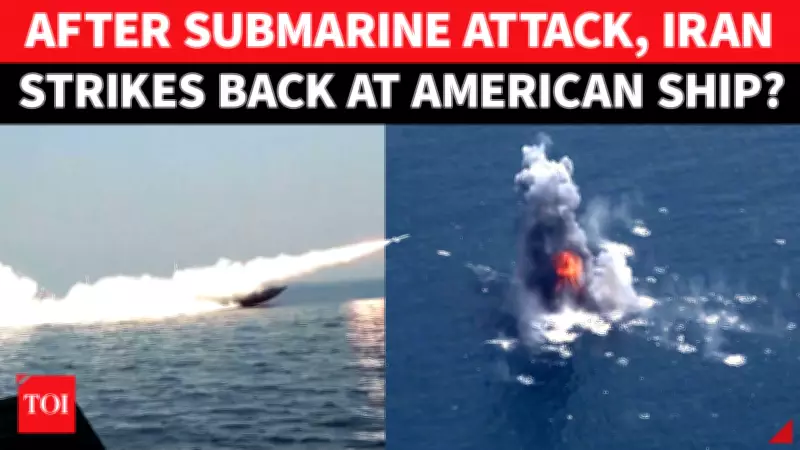
Iran Claims Retaliatory Strike on US Tanker in Persian Gulf
In a significant escalation of maritime tensions, Iran has asserted that its naval forces successfully targeted and struck a United States oil tanker in the northern Persian Gulf. This aggressive action comes merely days after the United States military confirmed the sinking of an Iranian warship in the Indian Ocean, marking a dangerous new phase in the ongoing conflict between the two nations.
Details of the Alleged Attack
According to reports from the Tasnim news agency, which maintains close ties to Iran's Islamic Revolutionary Guard Corps (IRGC), Iranian naval warships launched a precise missile strike against the American vessel. The attack reportedly ignited a substantial fire aboard the tanker, though specific details regarding the extent of the damage or potential casualties remain unverified by independent sources at this time.
The timing of this incident is particularly critical, as it represents a direct response to the earlier US military action that resulted in the destruction of the Iranian warship IRIS Dena. This tit-for-tat exchange underscores the rapidly deteriorating security situation in one of the world's most strategically important waterways.

Tehran Issues Stern Warning to International Shipping
In the wake of this alleged attack, Iranian authorities have issued a stark and unambiguous warning to vessels from the United States, Israel, European nations, and their allies. Tehran has explicitly cautioned these ships against attempting to enter or transit through the Strait of Hormuz, a narrow chokepoint through which approximately one-fifth of the world's oil supply passes daily.
The IRGC has declared that any ship disregarding this warning and attempting to navigate the strait could become a legitimate target for Iranian military forces. This declaration effectively threatens to disrupt global energy supplies and has sent shockwaves through international markets and diplomatic circles.
Strategic Implications of the Escalation
The Strait of Hormuz has long been a flashpoint for regional tensions, but this latest development represents one of the most serious confrontations in recent years. The Iranian claim of attacking a US tanker, if substantiated, would mark a significant escalation in Tehran's willingness to directly challenge American naval presence and interests in the region.
This incident occurs against a backdrop of heightened regional instability, with multiple conflicts and proxy wars already straining relations between Iran, its allies, and Western powers. The potential for miscalculation or further escalation remains dangerously high, as both sides demonstrate increased military posturing and rhetoric.
International observers and diplomatic channels are closely monitoring the situation, with concerns growing about the possibility of a broader regional conflict that could severely impact global oil prices and maritime security. The coming days will be crucial in determining whether this incident leads to de-escalation or further military confrontations in the volatile Persian Gulf region.