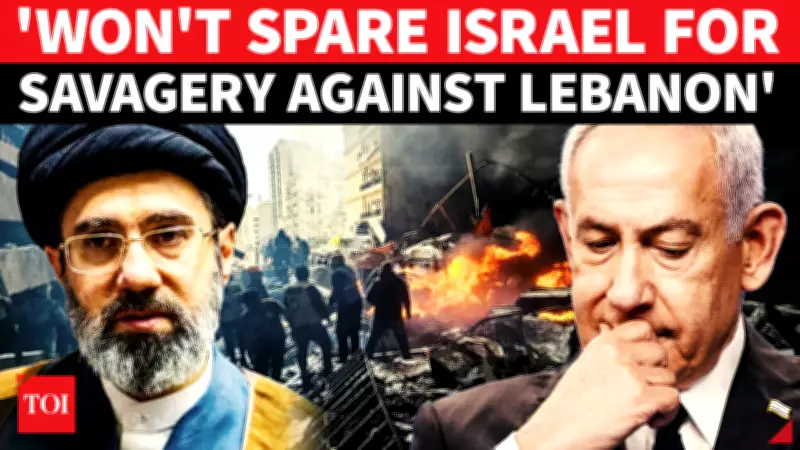
Iran Prepares Heavy Military Response as Israel-Lebanon Conflict Escalates
The fragile ceasefire between Iran and Israel, brokered by U.S. President Donald Trump just two weeks ago, now stands on the brink of collapse as Tehran prepares what it calls a "heavy response" to Israel's ongoing military operations in Lebanon. Senior Iranian military commanders have issued stark warnings that retaliation could be imminent, with the Islamic Revolutionary Guard Corps (IRGC) declaring that any attack on Hezbollah will be treated as a direct attack on Iran itself.
Iranian Military Commanders Issue Dire Warnings
A senior IRGC commander has publicly stated that the battlefield is actively "preparing for a heavy response" against Israeli forces, while simultaneously calling for national unity among the Iranian public. This declaration comes amid increasing tensions following Israel's continued strikes in Lebanon, which Iran views as a direct provocation requiring immediate military action.
State media outlets, including Islamic Republic of Iran Broadcasting, have reported that Iran has threatened a "regret-inducing response" should Israeli military operations persist. The language suggests Tehran is preparing significant retaliatory measures that could dramatically escalate the regional conflict beyond current levels.

Ceasefire Agreement Under Threat of Collapse
According to reports from Tasnim News Agency, Iran is considering withdrawing entirely from the U.S.-brokered ceasefire agreement that has maintained a fragile peace for the past fortnight. Iranian military forces have reportedly already identified potential targets for retaliation, indicating that planning for military action is well underway despite the diplomatic agreement.
The situation represents a significant diplomatic setback for the Trump administration, which had touted the ceasefire as a major foreign policy achievement. The potential collapse of this agreement could plunge the region back into open conflict with potentially devastating consequences for regional stability.
Regional Implications and Military Posturing
The IRGC commander's declaration that attacks on Hezbollah will be treated as attacks on Iran itself represents a significant escalation in rhetoric and military commitment. This statement effectively removes any ambiguity about Iran's willingness to directly engage Israeli forces in defense of its Lebanese allies.
Military analysts suggest that Iran's threatened response could take multiple forms, including:
- Direct missile strikes against Israeli military positions
- Increased support for Hezbollah operations in Lebanon
- Naval maneuvers in strategic waterways like the Strait of Hormuz
- Cyber warfare targeting Israeli infrastructure
The timing of these threats is particularly concerning given the recent ceasefire agreement, suggesting that diplomatic efforts have failed to address underlying tensions between the two regional powers.
International Concerns and Diplomatic Fallout
The escalating situation has raised alarms internationally, with concerns that a renewed Iran-Israel conflict could destabilize the entire Middle East region. The explicit threat to withdraw from the ceasefire agreement represents a direct challenge to U.S. diplomatic efforts and could trigger broader regional consequences.
As both sides continue military preparations, the window for diplomatic intervention appears to be closing rapidly. The coming days will likely determine whether the region returns to open conflict or whether last-minute diplomatic efforts can salvage the fragile peace established just two weeks earlier.