Iran Deploys Cluster Bomb Missiles in Escalating Attacks on Israel
The Israel military has disclosed that Iran recently launched multiple ballistic missiles equipped with cluster bomb warheads at Israeli territory. These weapons indiscriminately spread small explosive submunitions across wide geographical areas, marking a dangerous escalation in the ongoing regional conflict.
How Cluster Bomb Warheads Operate
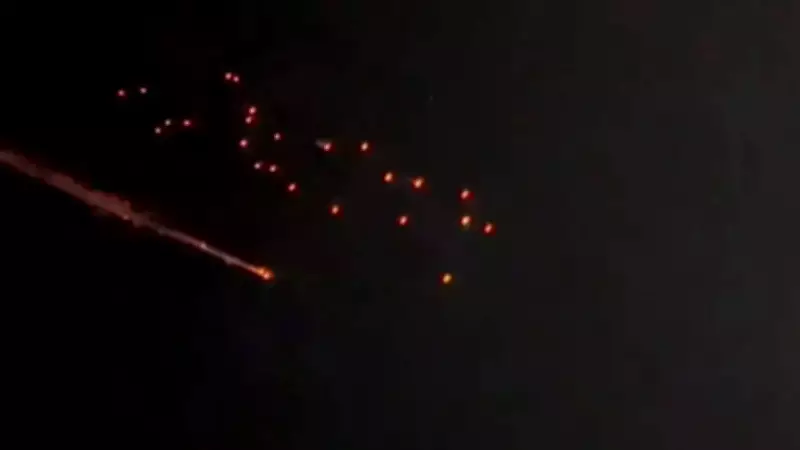
According to detailed information from the Israel Defense Forces (IDF), cluster munitions are specifically designed weapons that release numerous small explosive submunitions over expansive areas. The warhead of such missiles opens during descent, scattering approximately 20 smaller munitions, each containing about 2.5 kilograms of explosives, across a radius of roughly 8 kilometers.
Military analysts emphasize that the introduction of these weapons fundamentally alters conflict dynamics. Rather than creating a single explosion at one specific point, a cluster warhead disperses many smaller bombs across a large zone, significantly increasing potential civilian casualties and causing more extensive infrastructure destruction.

Confirmed Attacks and Recent Incidents
The IDF has confirmed that Iran has launched ballistic missiles carrying cluster bomb warheads at Israel on several occasions during the current conflict, as well as during the June 2025 war. Additionally, Iran-backed Houthi forces in Yemen launched multiple missiles with similar cluster bomb warheads at Israel last year.
In a recent incident last Tuesday, submunitions from a cluster bomb warhead struck several locations in central Israel, resulting in injuries to twelve people according to Israeli medical personnel. Footage captured on Sunday showed two dozen fragments streaking through the sky after a cluster bomb warhead scattered its deadly payload across central Israel.
International Concerns and Speculation
Israeli defense experts have indicated that Iran may have received external assistance in developing or acquiring these advanced missile systems. There is growing speculation about possible military technology transfers from either Russia or China, though no concrete evidence has been publicly presented to substantiate these claims.
The situation is further complicated by the fact that many submunitions fail to explode upon impact with the ground. These unexploded ordnance pieces continue to pose significant danger to civilians long after attacks, effectively functioning as landmines. The IDF Home Front Command has issued urgent warnings advising people not to approach any missile remains they might encounter.
Global Cluster Munitions Convention
Internationally, 123 countries have committed to the objectives of the 2008 Convention on Cluster Munitions, which seeks to ban these weapons entirely. The convention text explicitly states that cluster bombs "kill or maim civilians, including women and children, obstruct economic and social development, impede post-conflict rehabilitation and reconstruction, and delay or prevent the return of refugees and internally displaced persons for many years after use."
Notably, several major military powers including the United States, Russia, China, India, Israel, Pakistan, and North Korea have not signed this international agreement. This lack of universal adherence complicates global efforts to eliminate these controversial weapons from modern warfare.
The deployment of cluster bomb missiles represents a significant escalation in the Iran-Israel conflict, raising serious humanitarian concerns about increased civilian casualties and long-term danger from unexploded ordnance across affected regions.