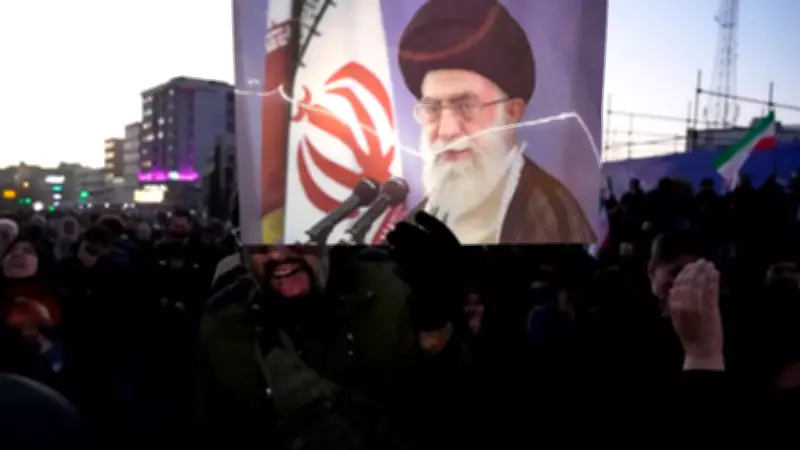
Iran Vows Swift Revenge After Supreme Leader Killed in Joint US-Israel Airstrikes
In a dramatic escalation of Middle East tensions, Iranian state television has issued a stark warning of imminent retaliation following the death of Supreme Leader Ayatollah Ali Khamenei in coordinated US-Israel airstrikes. The operation, codenamed 'Epic Fury', targeted Khamenei's heavily fortified Leadership House compound in Tehran, marking a unprecedented direct attack on Iran's highest authority.
State Media Broadcasts Emotional Outburst and Dire Threats
During a live broadcast on PressTV, anchor Maryam Azarchehr broke down emotionally while announcing Khamenei's death, framing the event in stark religious and geopolitical terms. "Today, those mourning him will be the orphans across the world, as the orphans once mourned Imam Ali, peace be upon him," she declared. "Today the devils of the world will celebrate — and everybody they have managed to brainwash."
Her tone quickly shifted to a direct threat aimed at US President Donald Trump. "This is not over. Trump is going to pay a price — a price paid by no American president at any time, paid by no Zionist, paid by no criminal of all time," Azarchehr warned. "Revenge is coming. Revenge is coming soon. It is coming after Trump and after everybody who facilitated this assassination. He will pay the ultimate price."

She further claimed retaliation would not be limited to Iran or traditional allies, but would also involve "Americans, Europeans — who saw the legacy of Imam Khomeini against Zionism." The broadcast concluded with chants of "Down with USA. Down with Israel," echoing decades of Iranian revolutionary rhetoric.
Operation 'Epic Fury': Daylight Strikes and Immediate Aftermath
The military action began around 09:30 Tehran time on Saturday, with US and Israeli forces launching what they described as "pre-emptive" daylight strikes. Initial reports confirmed explosions near Khamenei's compound, with satellite imagery later showing blackened buildings and significant debris within a one-kilometer radius. Israeli officials stated the compound was "destroyed in a powerful surprise strike."
Regional repercussions were immediate:
- Missiles struck the US Navy headquarters in Bahrain
- Explosions were reported in Abu Dhabi and Doha
- Iran launched attacks on US military bases across the Middle East under operation 'Truthful Promise 4'
- An AI Tel Aviv flight was forced to return to India mid-route
Iran has officially declared a 40-day period of national mourning, a significant cultural and religious observance following the death of a major figure.
Political Vacuum and Succession Crisis
Khamenei's death creates a monumental leadership void in Iran. Having ruled since 1989 after succeeding Ayatollah Ruhollah Khomeini, he spent nearly four decades consolidating control over:
- The clerical establishment
- The judiciary system
- The armed forces, particularly the Islamic Revolutionary Guard Corps (IRGC)
Under Iran's constitution, a panel of clerics is responsible for selecting the next supreme leader. However, analysts warn that in wartime conditions, power could temporarily shift to a council or directly to the IRGC. With tensions at boiling point, even minor factional fractures could destabilize the political system Khamenei spent decades fortifying.
International Reactions and Escalating Tensions
President Trump announced Khamenei's death on Truth Social, writing: "Khamenei, one of the most evil people in history, is dead," and calling the strike "justice for the people of Iran" and for Americans allegedly harmed by Iranian actions.
The situation represents the most severe escalation in US-Iran relations in decades, with Iranian media explicitly framing the conflict as a continuation of the revolutionary struggle against Western and Israeli influence. The coming days will likely see:

- Increased military posturing across the region
- Potential retaliatory strikes against US and Israeli interests
- Internal power struggles within Iran's political and military establishment
- International diplomatic efforts to prevent full-scale war
As Iran enters its mourning period, the world watches anxiously for the "revenge" that state media has promised is "coming soon." The assassination of a sitting supreme leader represents uncharted territory in modern Middle East conflicts, with potentially catastrophic consequences for regional stability.