

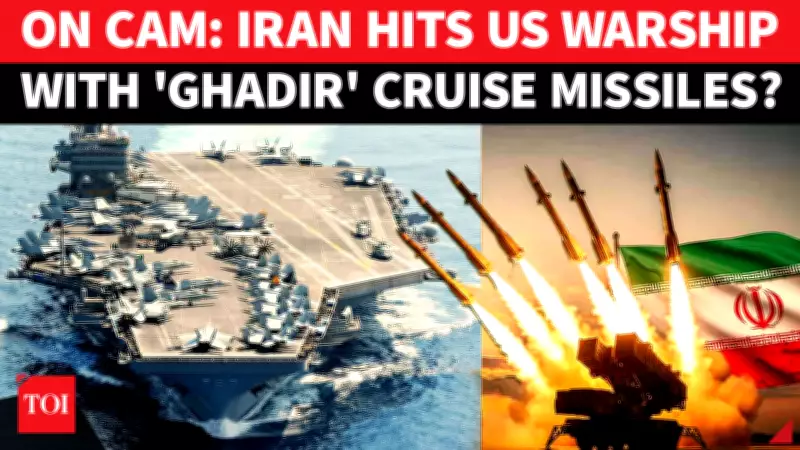
Iranian Naval Commander Issues Stark Warning to Americans After US Warship Targeted
In a significant escalation of tensions in the Middle East, Iran has claimed it targeted the USS Abraham Lincoln, a prominent U.S. Navy aircraft carrier, using coastal cruise missiles. The incident, reported on Wednesday, March 25, 2026, has prompted a direct warning from Iranian naval officials, putting Americans firmly in the crosshairs of regional conflict.
Iran's Missile Claim and US Warship Response
According to Iranian naval sources, the USS Abraham Lincoln entered the operational range of Iran's advanced missile systems, leading to the deployment of coastal cruise missiles. Iranian officials allege that this action forced the U.S. aircraft carrier to alter its course and change position to avoid potential damage. The targeting marks a bold move in the ongoing strategic maneuvers between Iran and the United States in the volatile Gulf region.
The Iranian navy has explicitly warned that the USS Abraham Lincoln will be targeted with missiles if it again enters the crosshairs of their naval forces. This statement underscores Iran's assertive posture and its readiness to engage U.S. military assets directly, raising alarms about the potential for broader conflict.

Background and Regional Implications
This event occurs against a backdrop of heightened military activities and diplomatic strains. Iran has recently demonstrated its missile capabilities, with reports indicating a 4,000 km strike range that has triggered concerns in European capitals like Paris and London. Additionally, the Islamic Revolutionary Guard Corps (IRGC) has issued warnings related to U.S. military deployments, referencing historical incidents to emphasize their resolve.
Other related developments include:
- Iran-linked drone operations spying on U.S. installations in Arab nations.
- Drone strikes targeting fuel tanks in Kuwait, causing significant fires.
- Cluster munition attacks near Tel Aviv, resulting in injuries and damage in Israeli cities.
- Allegations of Russian assistance in Iranian missile and drone attacks against U.S. targets in the Gulf.
These actions suggest a coordinated strategy by Iran to project power and challenge U.S. influence in the Middle East, with potential ramifications for global security and international relations.
Warning to Americans and Strategic Calculations
The Iranian naval commander's warning, explicitly mentioning "Americans in crosshairs," serves as a direct threat to U.S. personnel and interests. This rhetoric aligns with Iran's broader narrative of resistance against what it perceives as American aggression, often citing past U.S. military actions as justification.
Analysts note that such warnings are intended to deter further U.S. naval movements in the region while bolstering Iran's domestic and regional standing. The situation is further complicated by political dynamics, including former U.S. President Trump's announcements and Saudi Arabia's potential involvement, as hinted by references to "MBS a warrior" and Saudi entry into the conflict.
As tensions escalate, the international community watches closely, with concerns that miscalculations could lead to a full-scale military confrontation. The targeting of the USS Abraham Lincoln and the subsequent warning highlight the fragile state of affairs in the Middle East, where diplomatic efforts are increasingly overshadowed by military posturing and strategic brinkmanship.






