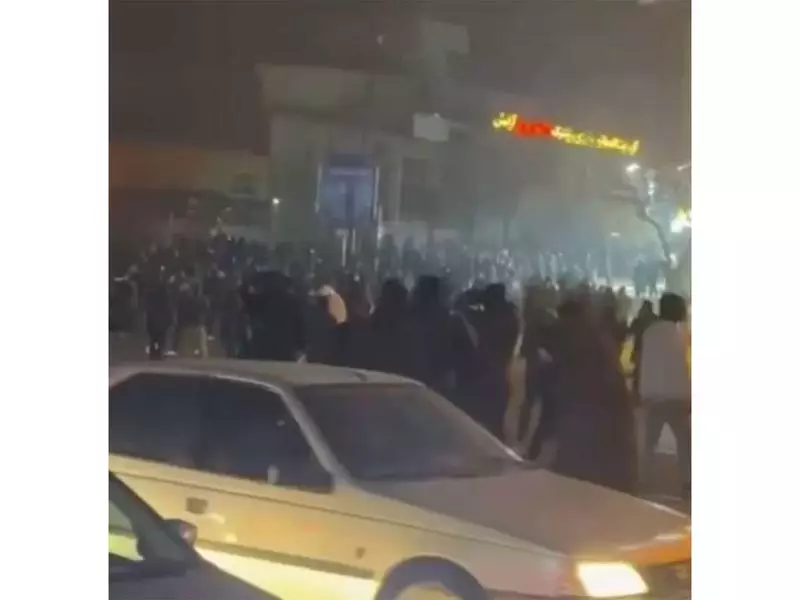
For a thirteenth consecutive day, Iran has been gripped by widespread and persistent protests, sparking a severe warning from the country's ruling establishment. The demonstrations, ignited by the death of 22-year-old Mahsa Amini in police custody, have shown no signs of abating, leading authorities to threaten a forceful response.
Escalating Tensions and Official Warnings
The situation across Iran remains highly volatile. On Saturday, the country's Interior Minister, Ahmad Vahidi, issued a stark ultimatum. He explicitly warned that the state's tolerance for the ongoing unrest was wearing thin and that security forces were prepared to confront the protesters "in the strongest manner" if they did not cease their activities immediately. This statement represents a significant escalation in the government's rhetoric as it attempts to quell the dissent.
Vahidi squarely blamed the foreign-based dissident group, the People's Mujahedin of Iran (MEK), for orchestrating the chaos. He accused the group of training individuals to create instability, a claim frequently used by Tehran to attribute domestic unrest to external enemies. Despite these warnings, reports from within Iran suggest that protests continued in various cities, including the capital Tehran, with chants directly challenging the supreme leadership.

The Spark: Mahsa Amini's Death in Custody
The catalyst for this national uprising was the tragic death of Mahsa Amini on September 16. The young woman was arrested by Iran's morality police, known as the Gasht-e Ershad, for allegedly violating the country's strict hijab (headscarf) laws. She fell into a coma shortly after her detention and died three days later. While authorities claim she suffered a sudden heart attack, her family and countless Iranians believe she was beaten, a suspicion fueled by eyewitness accounts from other detainees.
Her death has acted as a powerful symbol, galvanizing public anger not just against the mandatory hijab laws but against decades of political and social repression. The protests have evolved into one of the most serious challenges to the Islamic Republic's authority in recent years, with women at the forefront, publicly cutting their hair and burning their headscarves.
Nationwide Unrest and Government Crackdown
The protests have spread far beyond Tehran, erupting in major cities like Mashhad, Isfahan, Rasht, and Shiraz, as well as in Kurdish regions in the northwest. Social media videos, though difficult to verify independently due to internet restrictions, show large crowds, burning police vehicles, and confrontations with security forces.
The government's response has been characteristically harsh. Internet access has been severely disrupted, particularly on platforms like Instagram and WhatsApp, to hamper organization and the flow of information. Human rights groups report a rising death toll. The Oslo-based group Iran Human Rights stated that at least 83 protesters have been killed by security forces since the demonstrations began. Iranian officials have provided a much lower figure, acknowledging only a few dozen deaths, including members of the security forces.
President Ebrahim Raisi, while attending the United Nations General Assembly in New York, has vowed to investigate Amini's death but has also defended the state's actions. Back home, the judiciary has instructed courts to deal "decisively" with the core instigators of the riots. The combination of threats, internet blackouts, and lethal force underscores the regime's determination to suppress the movement before it grows further.
The persistence of the protests into a second week signals a profound level of public discontent. The movement, initially focused on women's rights, has rapidly transformed into a broader outcry against theocratic rule, economic hardship, and lack of personal freedoms. The regime's threat of a strongest-possible response sets the stage for a potentially more violent and decisive confrontation in the days ahead, as Iran faces a pivotal moment in its recent history.