

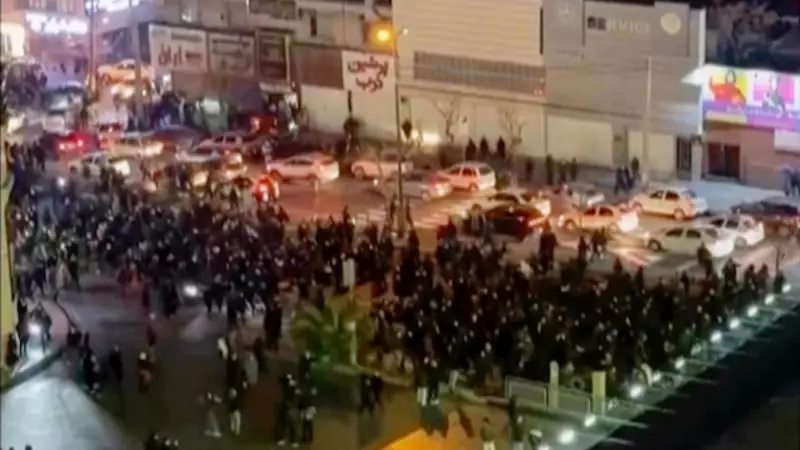
Iranian authorities have escalated their response to nationwide protests, issuing a stark warning that demonstrators could face the death penalty. Officials have branded the protesters as 'enemies of God,' a serious charge under the country's legal system, as unrest continues to spread despite a severe internet blackout.
Unrest Intensifies Amid Communication Blackout
The protests, which began in mid-September following the death of 22-year-old Mahsa Amini in morality police custody, have evolved into one of the most significant challenges to Iran's theocratic regime in years. Amini was detained for allegedly violating the country's strict hijab (headscarf) laws. Despite government efforts to suppress information by imposing widespread internet restrictions and blocking platforms like WhatsApp and Instagram, demonstrations have persisted for over three months.
Authorities have responded with increasing force. Iran's judiciary chief, Gholamhossein Mohseni Ejei, has instructed courts to act 'decisively' and issue harsh punishments. State media has reported that some protesters have already been charged with 'enmity against God' (moharebeh) and 'corruption on earth' (ifsad fil-arz), charges that carry the death penalty.

A Stern Warning from the Judiciary
The warning represents a significant hardening of the official stance. In a televised statement, a senior judiciary official stated, "Those who disrupt the peace and commit crimes against the national security are enemies of God and will be punished severely." This rhetoric is designed to justify the most extreme measures under Iran's Islamic penal code.
Reports from human rights groups outside Iran paint a grim picture of the crackdown. The Oslo-based group Iran Human Rights estimates that over 500 protesters have been killed since the movement began, including a significant number of women and children. Thousands more have been arrested. The government has not provided official casualty figures.
International Reaction and the Path Forward
The international community has expressed deep concern. The United Nations Human Rights Office has called for an independent investigation into the violence and the death of Mahsa Amini. UN High Commissioner for Human Rights Volker Türk urged Iranian authorities to immediately halt the use of unnecessary and disproportionate force against protesters.
Meanwhile, inside Iran, the internet blackout continues to hinder the flow of information, making it difficult to verify on-ground developments. However, sporadic videos and reports that do emerge show continued public defiance, with chants against the supreme leader and calls for greater freedoms, particularly for women.
The regime's decision to threaten the death penalty marks a critical juncture. It signals a move from attempting to quell protests through arrests and violence to employing the ultimate judicial sanction to instill fear. This strategy risks further inflaming public anger and drawing sharper international condemnation, even as it aims to crush the spirit of the protest movement that has gripped the nation for months.






