

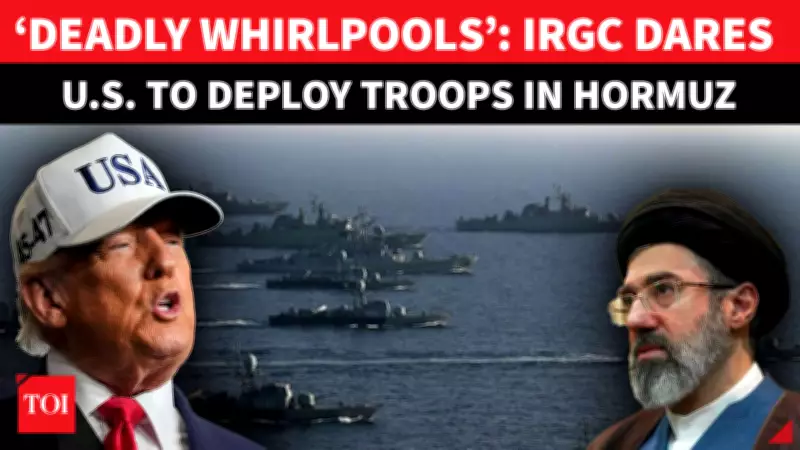
Iran's Military Issues Dire Warning Over Strait of Hormuz Control
Iran has dramatically escalated regional tensions by declaring complete operational control over the strategically vital Strait of Hormuz. The Islamic Revolutionary Guard Corps (IRGC) has issued a stark warning to adversaries, stating that any hostile moves could transform the critical waterway into what they describe as "deadly whirlpools." This provocative statement represents one of Tehran's most explicit threats regarding its ability to disrupt maritime traffic through the world's most important oil transit corridor.
Military Show of Force and Surveillance Claims
The IRGC recently released drone footage that purportedly demonstrates comprehensive surveillance capabilities across the entire Strait of Hormuz. This visual evidence appears designed to substantiate Iran's claims of complete situational awareness and military dominance over the narrow passage that facilitates approximately one-fifth of global oil shipments. The timing of this display coincides with heightened military posturing in the region.
Context of Escalating US-Iran Tensions
This latest warning follows significant moves by former US President Donald Trump's administration to impose a naval blockade in the area. Security analysts note that control over the Strait of Hormuz has become Iran's most potent strategic leverage point, shifting the focus of international tensions from nuclear proliferation concerns to direct competition over critical maritime routes. The escalating standoff threatens not only regional stability but also global economic security due to potential disruptions to oil flows.

Strategic Implications and Economic Concerns
Tehran has explicitly stated that it will not reopen the Strait of Hormuz to normal traffic without a complete cessation of hostilities and a full resolution to ongoing conflicts. This hardline position creates significant challenges for international diplomacy and energy markets. The situation represents a dangerous escalation where military miscalculation could have catastrophic consequences for global trade and energy security.
Experts monitoring the region emphasize that the current crisis differs fundamentally from previous US-Iran confrontations. Whereas past tensions primarily centered on Iran's nuclear program, the present conflict directly involves control over physical geography that is essential to the global economy. This geographical dimension adds complexity to potential diplomatic solutions and increases the risks of military escalation.
Regional Security Dynamics
The Strait of Hormuz warning occurs within a broader context of regional instability. Iran's military posture reflects growing confidence in its asymmetric warfare capabilities, including drone technology and coastal defense systems. The reference to "deadly whirlpools" suggests potential unconventional tactics that could make navigation through the strait hazardous without necessarily employing conventional naval forces.
International observers are particularly concerned about how this escalation might affect already fragile global energy markets. Any significant disruption to oil shipments through the Strait of Hormuz would likely trigger immediate price spikes and economic uncertainty worldwide, potentially exacerbating existing inflationary pressures in numerous economies.






