

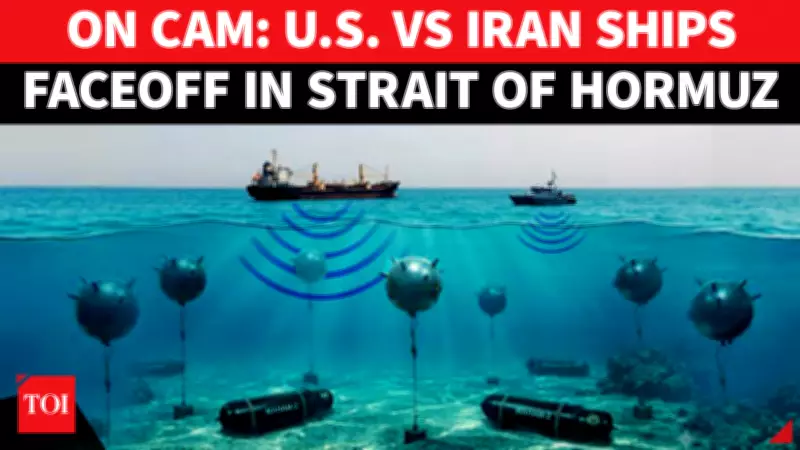
In a significant development in the ongoing geopolitical standoff, Iran's Islamic Revolutionary Guard Corps (IRGC) Navy successfully escorted a bulk carrier through the contested waters of the Strait of Hormuz, following a failed chase by the United States Navy under former President Donald Trump's administration. This incident marks a notable humiliation for the U.S., as the Iranian vessel outpaced and outmaneuvered American naval forces in the strategically vital waterway.
New Mines Reported in Strait of Hormuz
Reports have emerged indicating the presence of new naval mines in the Strait of Hormuz, raising the stakes in an already tense maritime environment. The deployment of these mines is seen as a direct challenge to international shipping and naval operations in the region. The IRGC Navy's escort operation was conducted amidst these reports, showcasing Iran's ability to project power and protect its assets in the face of U.S. opposition.
Trump's Response: Authorizing Force
Former President Donald Trump responded to the developments with a stark order, authorizing the use of force against any vessels involved in deploying mines. This directive has escalated fears of a direct military confrontation between the two nations. Trump's statement emphasized a zero-tolerance policy toward maritime sabotage, further heightening tensions in the region.

Oil Prices Surge Amid Market Anxiety
The escalating situation in the Strait of Hormuz has had immediate economic repercussions, with oil prices surging for a third consecutive day. Market analysts attribute this rise to deepening anxiety over potential disruptions to global energy flows. The Strait of Hormuz is a critical chokepoint for oil shipments, and any threat to its security directly impacts global energy prices.
Uncertainty Over Mojtaba Khamenei's Condition
Adding another layer of uncertainty to the crisis are reports regarding the health condition of Mojtaba Khamenei, a key Iranian figure. While details remain scarce, the situation has fueled speculation about potential leadership changes in Iran, which could influence the country's strategic decisions in the ongoing standoff.
Naval Blockades and Escalation Risks
Both sides have tightened their naval blockades, with the U.S. Navy increasing its presence in the region and Iran reinforcing its defensive positions. The risk of a wider conflict is growing, as each side views the other's actions as provocations. The international community has called for restraint, but diplomatic efforts have yet to yield a breakthrough.
Global Energy Flows Under Threat
The situation in the Strait of Hormuz poses a direct threat to global energy security. With approximately 20% of the world's oil passing through the strait, any prolonged disruption could have severe consequences for the global economy. Shipping companies are already considering alternative routes, which would increase costs and transit times.
Broader Implications for the Middle East
The standoff between the U.S. and Iran is not occurring in a vacuum. It is part of a broader pattern of escalating tensions across the Middle East, involving proxy conflicts, diplomatic breakdowns, and military posturing. The outcome of this confrontation could reshape the regional balance of power and influence the strategies of other key players, including Saudi Arabia, Israel, and Russia.
As the world watches, the situation in the Strait of Hormuz remains fluid. The failed chase by the U.S. Navy and Iran's successful escort operation have demonstrated the limits of American naval superiority in the region. With both sides unwilling to back down, the risk of a miscalculation leading to open conflict is higher than ever.






