

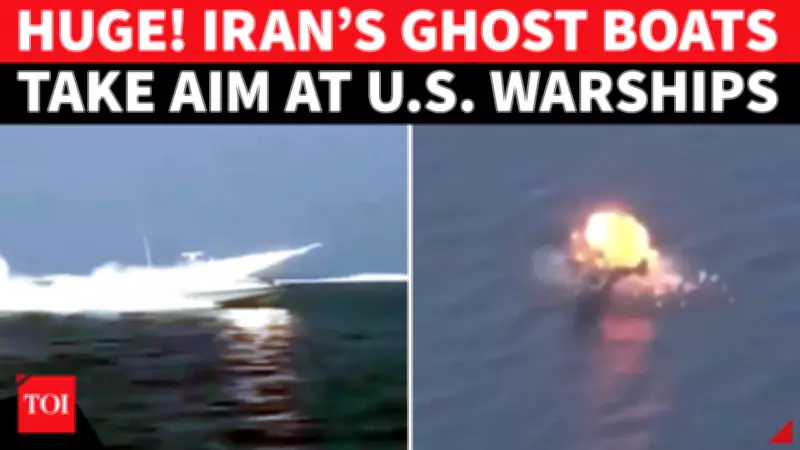
Iran Deploys 'Ghost Boats' in Strait of Hormuz as US Warships Approach
The strategic Strait of Hormuz is witnessing renewed tensions as United States warships advance closer to Iran's coastline, prompting Tehran to respond with a unique and stealthy naval strategy. Instead of relying on conventional firepower, Iran is leveraging silence, speed, and surprise through its specialized fleet of "Ghost Boats".
What Are Iran's 'Ghost Boats'?
At the heart of Iran's defensive posture are the Zolfaghar-class fast attack craft, designed as semi-submersible vessels that can evade radar detection. These boats are engineered for operations in narrow and shallow waters, making them ideal for the challenging geography of the Strait of Hormuz.
- Built to operate with minimal radar signature, enhancing stealth capabilities.
- Capable of launching swarm attacks to overwhelm larger, more expensive warships.
- Utilize unpredictability and numbers as key tactical advantages.
Asymmetric Warfare in a Critical Chokepoint
As Washington demonstrates military readiness in the region, Iran is placing its bets on asymmetric warfare tactics rather than engaging with conventional naval fleets. This approach aims to shift the balance of power in one of the world's most dangerous maritime chokepoints.

The strategy involves:
- Employing hit-and-run tactics where the boats strike quickly and then disappear.
- Targeting superior naval forces through coordinated swarm assaults.
- Exploiting the geographical constraints of the strait to neutralize technological advantages.
Geopolitical Implications
The deployment of these "Ghost Boats" underscores the escalating tensions between Iran and the United States in the Middle East. The Strait of Hormuz serves as a vital passage for global oil shipments, and any military confrontation here could have far-reaching consequences for international trade and energy security.
Iran's reliance on such asymmetric methods highlights its adaptation to counter the technological superiority of the US Navy, potentially setting a precedent for future naval conflicts in contested waterways.






