

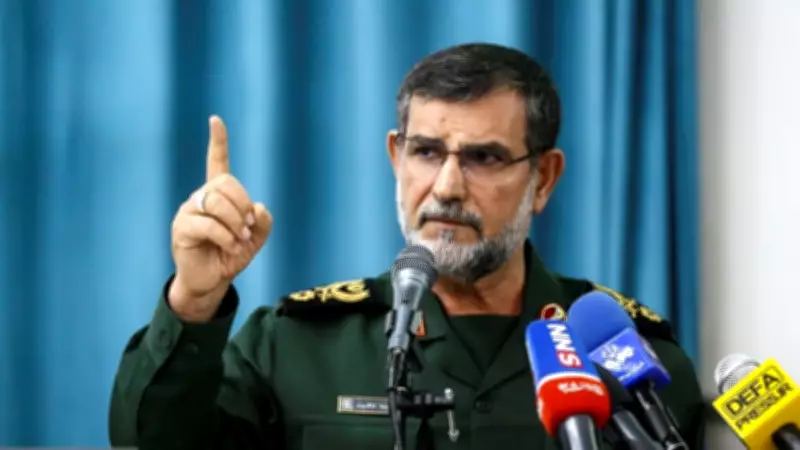
Iran's IRGC Navy Commander Alireza Tangsiri Reportedly Killed in Israeli Strike
Rear Admiral Alireza Tangsiri, the head of Iran's Islamic Revolutionary Guard Corps (IRGC) Navy, has been killed in an Israeli strike in the southern port city of Bandar Abbas, according to Israeli media reports citing an unnamed official. The strike, which has not yet been formally acknowledged by either Iran or Israel's military, marks a significant escalation in the ongoing conflict across West Asia.
Who Was Alireza Tangsiri?
Alireza Tangsiri was one of Iran's most influential and hardline military figures, serving as commander of the IRGC Navy since 2018 after being appointed by Supreme Leader Ali Khamenei. A veteran of the Iran-Iraq War, Tangsiri rose through the ranks with a reputation for aggressive maritime tactics and staunch opposition to the United States and its allies.
He previously commanded key naval districts and played a pivotal role in shaping Iran's asymmetric naval doctrine in the Gulf. Known for his combative rhetoric, Tangsiri repeatedly threatened Western naval forces and openly spoke about confronting US warships in the Persian Gulf.

He also backed the detention of foreign sailors whose vessels entered Iranian waters, incidents that periodically heightened tensions in the region. In recent months, he had renewed warnings about closing the Strait of Hormuz, asserting Iran's control over regional shipping lanes.
Strategic Impact and Regional Tensions
Tangsiri was widely seen as a central figure in Iran's naval strategy and was closely linked to recent efforts to restrict movement through the strategically vital Strait of Hormuz. His leadership focused on expanding Iran's naval capabilities, improving coordination within the IRGC, and strengthening surveillance and missile systems.
Israeli officials claimed Tangsiri had been "responsible for the closure" of the Strait, a critical global oil artery through which a significant portion of the world's energy supplies passes. His reported killing comes amid intensifying hostilities, with Iran launching repeated waves of missile and drone attacks under its ongoing military campaign.
Despite his hardline image, Tangsiri occasionally framed Iran's naval posture as defensive, insisting that regional security remained a priority. Still, his tenure was defined by brinkmanship and strategic signalling aimed at deterring foreign military presence in the Gulf.
Broader Implications and International Response
The situation remains fluid, with no independent confirmation yet of Tangsiri's death from Tehran. Meanwhile, reports suggest the US is considering deploying elements of the 82nd Airborne Division to the region, signalling fears of a broader confrontation.
This development occurs against a backdrop of escalating tensions, including:
- Iran's selective access for friendly nations in the Hormuz passage, as warned by the UN on global energy flows.
- Discussions of a toll system in the Strait of Hormuz, with Iran drafting a bill to charge ships for safe passage amid the war.
- Ongoing political rhetoric, such as former US President Donald Trump's claims that Iran is "afraid" to admit it wants a deal.
The reported strike on Tangsiri underscores the volatile nature of the conflict, with potential ramifications for global energy markets and regional stability. As both sides navigate this heightened phase, the international community watches closely for further developments and official statements.






