

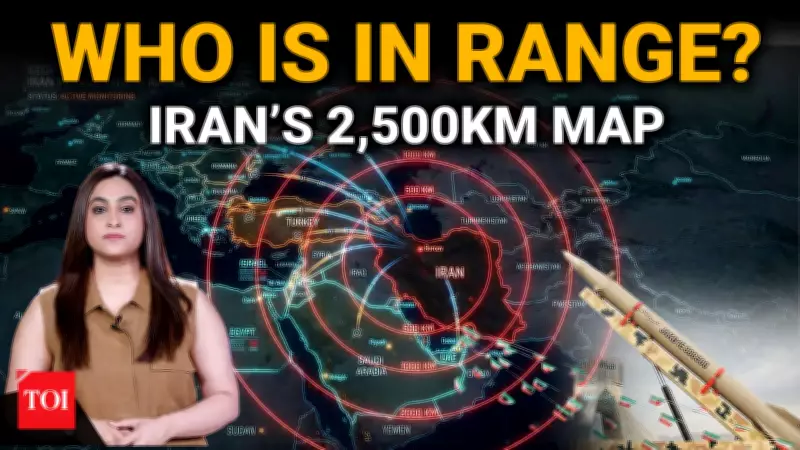
Iran's Missile Arsenal: A Comprehensive Analysis of Regional and Global Reach
Iran has systematically constructed the most extensive and sophisticated missile arsenal in the Middle East, fundamentally altering the strategic landscape of the region and beyond. This development represents a significant escalation in military capabilities, moving far beyond traditional regional borders and posing new challenges to global security architectures.
The Architecture of Iran's Missile Cities
Tehran's military strategy has centered around the development of what defense analysts term "missile cities" - fortified underground complexes that house and protect Iran's growing arsenal. These facilities represent a new paradigm in modern warfare, designed to withstand preemptive strikes while maintaining rapid deployment capabilities. The infrastructure supports everything from high-speed short-range ballistic missiles to advanced long-range systems that can reach targets thousands of kilometers away.
Layered Strike Capabilities: From Regional to Global
Iran's missile program features multiple layers of strike capabilities that create overlapping threat zones:

- Short-Range Systems: Designed for immediate regional threats with rapid deployment capabilities
- Medium-Range Ballistic Missiles: Covering the entire Middle East and parts of Eastern Europe
- Long-Range Strategic Weapons: Capable of reaching targets in Western Europe and North Africa
Recent intelligence assessments suggest that some Iranian missile systems now possess ranges exceeding 4,000 kilometers, potentially putting major European capitals within theoretical strike distance. This expansion represents a qualitative leap in Iran's military projection capabilities.
Strategic Threat to US Military Installations
The growing sophistication of Iran's missile program poses a direct and escalating threat to United States military bases throughout the Middle East. American installations in countries like Iraq, Syria, and the Gulf Cooperation Council nations now operate under the constant shadow of potential missile attacks. This strategic reality has forced significant adjustments in US military posture and base defense systems throughout the region.
Recent months have seen increased targeting of US facilities by Iranian-backed proxy groups, utilizing increasingly advanced drone and missile technologies. These attacks have demonstrated improved accuracy and penetration capabilities, challenging existing defense systems and requiring constant technological upgrades from US forces.
The Diego Garcia Incident and Long-Distance Capabilities
Perhaps most concerning to Western military planners are recent reports of Iranian attempts to target Diego Garcia, the strategically vital British-administered island in the Indian Ocean that hosts major US military facilities. While these attempts have reportedly been unsuccessful, they demonstrate Tehran's ambition to project power far beyond its immediate neighborhood and threaten critical Western military assets in distant theaters.
The Diego Garcia incidents suggest that Iran is testing the limits of its longest-range systems and developing the targeting capabilities necessary for precision strikes against isolated but strategically important locations. This represents a significant escalation in Iran's military ambitions and capabilities.
Regional Implications and Escalating Tensions
Iran's missile buildup occurs against a backdrop of escalating regional tensions, particularly with Israel and its Arab neighbors. The capability to strike targets throughout the Middle East with precision has changed the strategic calculus for all regional actors, forcing new defense investments and alliance formations.
The development has particularly alarmed Israel, which faces an existential threat from Iranian missiles that could potentially overwhelm its sophisticated Iron Dome and other missile defense systems. This has led to increased Israeli military preparations and more aggressive posturing toward Iranian facilities in Syria and elsewhere.

The Future of Missile Warfare in the Middle East
As Iran continues to expand and refine its missile capabilities, the entire Middle East faces a new era of warfare where missile attacks could become a primary rather than secondary military tool. This development challenges traditional military doctrines and requires new approaches to defense, deterrence, and diplomacy.
The international community faces difficult questions about how to respond to Iran's missile program within the framework of existing non-proliferation agreements and regional security arrangements. The coming years will likely see continued technological advancement in Iranian missile capabilities, potentially including hypersonic technologies and improved guidance systems that could further alter the regional balance of power.
This analysis is based on current intelligence assessments and open-source information about Iran's military capabilities and strategic intentions. The situation remains fluid as technological developments and geopolitical dynamics continue to evolve in this volatile region.





