

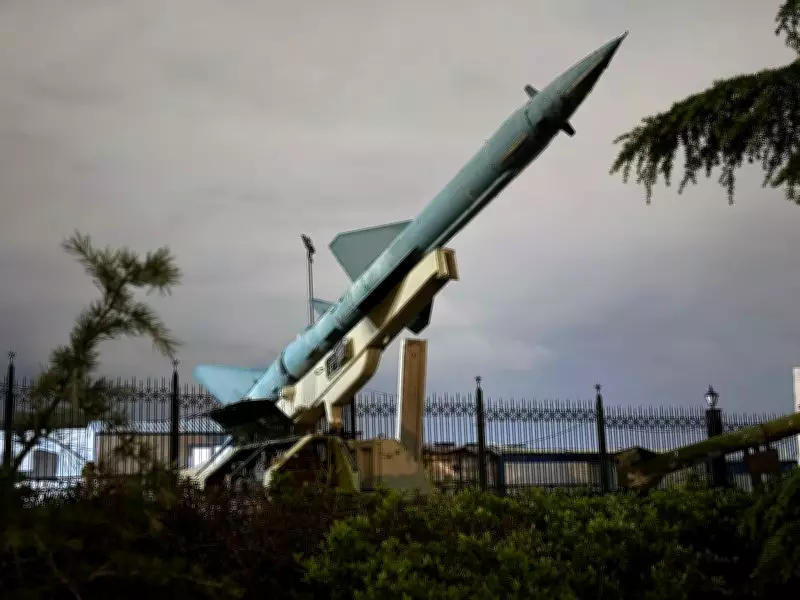
Iran's Sejjil Ballistic Missile: A Solid-Fuel Strategic Game-Changer in West Asia
The Sejjil ballistic missile, also known as Sajjil or Ashura, represents a significant leap in Iran's domestic aerospace and defense capabilities. Developed indigenously by Iran's defense industries, this two-stage medium-range ballistic missile (MRBM) marks a pivotal technological shift from older liquid-fuel designs to advanced solid-propellant systems. Unlike its predecessors, which were often derived from Soviet or North Korean liquid-fuel models, the Sejjil is designed for quicker deployment and easier maintenance, reflecting Iran's strategic push toward self-reliance.
Operational Deployment and Combat Use
Iran has reportedly utilized the Sejjil missile operationally during military actions targeting strategic sites linked to the United States and Israel. This deployment marks the first known instance of the system being employed in active combat, underscoring its transition from a symbolic deterrent to a practical battlefield asset. The missile's nickname, "dancing missile," stems from its ability to adjust trajectory mid-flight, a feature that complicates interception attempts by adversaries.
Strategic Importance and Regional Impact
With an estimated range of approximately 2,000 kilometers, the Sejjil missile places much of the Middle East and parts of southeastern Europe within striking distance. This capability significantly strengthens Iran's regional deterrence posture, enabling it to project power across West Asia. The shift to solid-fuel technology is particularly crucial, as earlier Iranian missiles relied on liquid propellants that required lengthy preparation times. In contrast, solid-fuel missiles like the Sejjil can be stored ready-to-launch, allowing for faster reaction during crises and enhancing the survivability of Iran's arsenal.

Technical Features and Advanced Capabilities
The Sejjil missile incorporates several key technical features that bolster its effectiveness:
- Solid-Fuel Propulsion: This enables long-term storage in a ready-to-launch state, drastically reducing launch preparation time and increasing operational readiness.
- Two-Stage Rocket Design: Sequential propulsion stages allow the missile to achieve higher speeds and extended range, improving its ability to penetrate defense systems.
- Long Operational Range: With a strike capability of roughly 2,000 km, the system can target strategic infrastructure across large parts of West Asia.
- Significant Payload Capacity: Estimated to carry a warhead of around 700 kg, the missile can deliver conventional or potentially other forms of payload.
- Maneuverable Trajectory: Mid-course adjustments at high altitude disrupt radar tracking and interception attempts, earning it the "dancing missile" moniker.
- Precision Guidance: Improved versions, such as Sejjil-2, incorporate inertial navigation and satellite-assisted guidance, enhancing targeting accuracy during the terminal phase of flight.
Challenges to Missile Defense Systems
The Sejjil missile is specifically designed to challenge missile defense architectures, such as Israel's Iron Dome and Arrow systems. Its maneuverable trajectory and rapid launch capabilities complicate interception efforts, posing a significant hurdle to regional air-defense strategies. This development highlights Iran's strategy of domestic military innovation, driven by decades of international sanctions and technology restrictions.
Broader Strategic Implications
The deployment of the Sejjil missile signals an escalation in the technological sophistication of regional missile arsenals, potentially raising tensions in an already volatile geopolitical environment. It reflects Iran's broader effort to build a self-reliant, solid-fuel missile force capable of rapid deployment and long-range strikes. As missile technology continues to evolve across West Asia, systems like the Sejjil are likely to play an increasingly central role in regional deterrence dynamics and strategic competition.

Overall, the Sejjil ballistic missile exemplifies Iran's commitment to enhancing its military capabilities through indigenous development, solidifying its position as a key player in West Asian security affairs.





