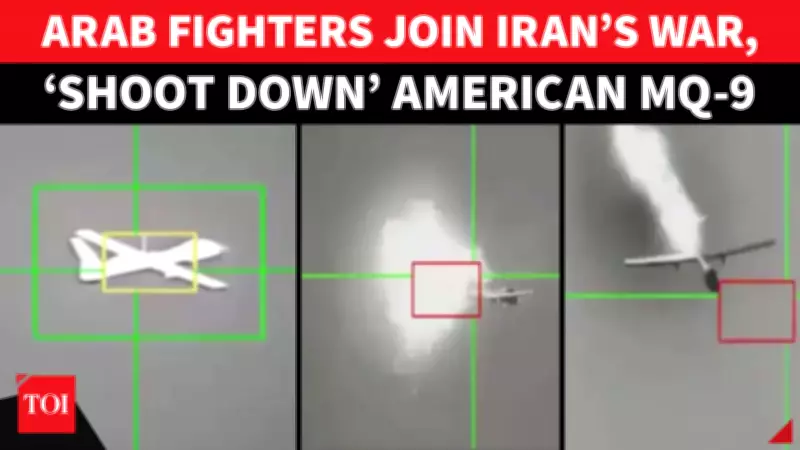
Iraqi Resistance Claims Downing of U.S. MQ-9 Reaper Drone as Conflict Widens
The regional conflict in the Middle East is expanding at a dangerously rapid pace, drawing Iraq directly into the escalating tensions between Iran, Israel, and the United States. In a significant development, fighters from the Islamic Resistance in Iraq have asserted responsibility for shooting down a powerful U.S. MQ-9 Reaper drone over Salah al-Din Province. This bold action marks a new and aggressive phase in the ongoing hostilities, signaling that Iraqi militias are prepared to engage actively if the war continues to broaden.
Immediate Retaliation and Militia Mobilization
Within hours of the drone incident, various militias announced coordinated waves of drone and missile attacks targeting U.S. military installations across Iraq. Among the strikes reported were assaults near Erbil International Airport, a key strategic location. The clear warning from these groups is that they stand ready to fight should the conflict expand further, demonstrating their capability and willingness to challenge American forces directly.
The downing of the MQ-9 Reaper, a high-altitude, long-endurance unmanned aerial vehicle used extensively for surveillance and strikes, represents a major tactical achievement for the Iraqi resistance. This event underscores the growing sophistication and audacity of militia operations in the region, potentially complicating U.S. military strategies and intelligence-gathering efforts.

Background of Rising Tensions
The current escalation follows months of rising tensions that have involved multiple state and non-state actors. Iran has been at the center of these conflicts, with recent developments including:
- Iran's deployment of Shahed drones, which have reportedly challenged American defense systems.
- Public declarations from Iranian leadership, such as Ayatollah Ali Khamenei's call for jihad against Israel and the U.S.
- Threats from Iranian officials, including Foreign Minister Araghchi, warning of consequences for U.S. actions.
- Military engagements by the Islamic Revolutionary Guard Corps (IRGC) against perceived threats along the Iran-Iraq border.
These actions have created a volatile environment where regional allies and proxies are increasingly drawn into the fray. For instance, Iran's top Arab ally has declared war on Israel, launching missiles, rockets, and drones, while incidents like the reported downing of an Iranian Su-24 by Qatari forces highlight the complex and interconnected nature of the conflict.
International Reactions and Domestic Pressures
The situation has sparked significant international concern and domestic debate. In the United States, voices from both military veterans and political figures have expressed opposition to further involvement. A U.S. military veteran recently stormed a Senate hearing to protest against war with Iran, emphasizing a desire not to fight Israel's battles. Similarly, Republican Representative Thomas Massie has criticized the potential for American casualties in what he describes as "Israel's war."
Internationally, NATO has faced internal divisions, with leaders like French President Emmanuel Macron and others condemning actions that could lead to war with Iran. These splits reflect broader anxieties about the consequences of a full-scale regional conflict, which could destabilize global security and economic stability.
Implications for Regional Stability
The entry of Iraqi militias into the conflict adds a new layer of complexity to an already tense situation. Their ability to target U.S. assets, as demonstrated by the drone downing and subsequent attacks, suggests that American forces may face increased risks in the region. This development could force a reassessment of U.S. military posture and diplomatic strategies in Iraq and beyond.
Moreover, the involvement of non-state actors like the Islamic Resistance in Iraq blurs the lines between conventional warfare and asymmetric tactics, making conflict resolution more challenging. The potential for miscalculation or escalation is high, as seen in recent missile attacks that forced millions of Israelis into shelters overnight in cities like Tel Aviv and Jerusalem.

As the conflict continues to widen, the international community watches closely, hoping to avert a broader war that could have devastating consequences for the Middle East and global peace.