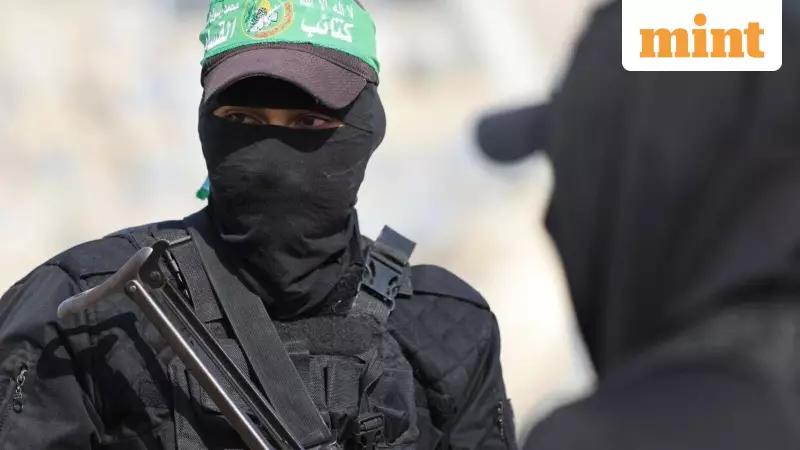
The fragile peace in Gaza is on the brink of collapse, with Israel and the militant group Hamas preparing for a potential return to full-scale war. The core issue blocking progress is Hamas's steadfast refusal to fully disarm, a key requirement of the peace plan championed by US President Donald Trump. This deadlock threatens to unravel the October ceasefire that ended two years of devastating conflict.
Military Buildup and a Stalled Peace Process
According to sources familiar with the situation, the Israeli military has drafted plans for a new ground operation inside Hamas-controlled Gaza. Concurrently, Hamas is actively rebuilding its military capabilities, including sections of its extensive tunnel network damaged in previous fighting. Arab and Israeli officials confirm the group has also regained financial strength, receiving a fresh influx of cash that allows it to pay salaries to its fighters regularly.
The peace plan, facing its first major hurdle, envisions a two-phase solution. The first phase, already implemented, has left Gaza divided, with Israel controlling just over 50% and Hamas the remainder. The critical second phase requires Hamas to relinquish both governing control and its arsenal. Only then would Israeli troops withdraw to a smaller buffer zone, making way for an international stabilization force and a Palestinian technocratic committee to administer Gaza, overseen by a Trump-chaired "Board of Peace."

The Disarmament Impasse and Regional Ripples
The disagreement over weapons is stark. While Israel and the US insist Hamas must give up all arms under the ceasefire, the group is only open to surrendering heavy weapons, not its small arms. Israeli estimates suggest Hamas possesses around 60,000 rifles for its 20,000 fighters. An Israeli official warned that if Hamas does not willingly disarm, Israel would force compliance, though no immediate invasion is planned.
President Trump has echoed this hardline stance, stating in December that "there will be hell to pay" if Hamas refuses to disarm. The consequences of renewed war would be catastrophic for Gaza's two million Palestinians, most already displaced and living in tents or makeshift shelters after a conflict that claimed over 70,000 Palestinian lives.
This Gaza tension unfolds against a broader backdrop of regional instability. Israel is also monitoring Hezbollah's rehabilitation in Lebanon and Iran's efforts to rebuild its ballistic missile program after a June war, warning of preemptive strikes. Trump has pledged support for military action if Iran revives its missile or nuclear programs.
Internal Dynamics and a Path Forward?
Within Hamas, a leadership election outside Gaza could influence its stance. The race pits hardliner Khalil Al-Hayya, opposed to disarmament, against the more compromise-oriented Khaled Mashal. Meanwhile, Hamas inside Gaza, led by Ezzedin Al-Haddad, is consolidating power, cracking down on opponents and rebuilding its financial coffers through taxation, stored cash, and Iranian funds.
Israeli security analysts suggest a new offensive could be "much faster and easier" now, as hostage risks are absent and displaced populations in tents are easier to evacuate. Options range from a swift invasion of Gaza City to a gradual takeover.
Beyond disarmament, other obstacles remain: Israel has not opened the Rafah border crossing with Egypt, the body of the last Israeli hostage has not been returned, and the US struggles to form the proposed international force. Both Israel and the US have linked any reconstruction in Gaza to Hamas laying down its weapons, leaving the enclave's future—and the specter of another war—hanging in the balance.