

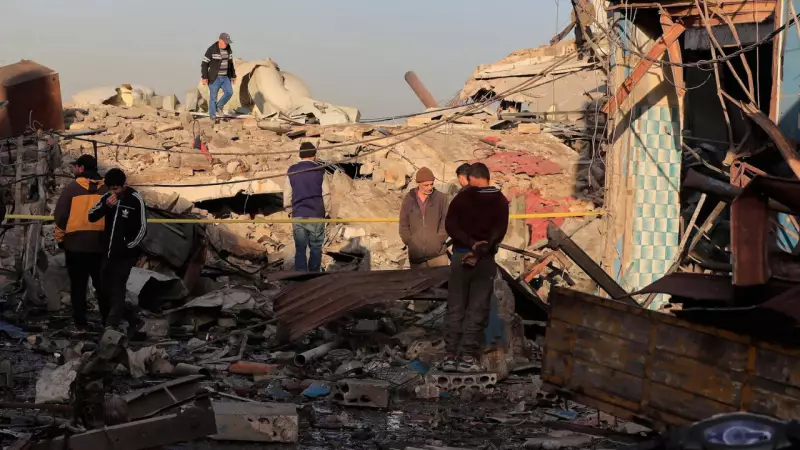
Israeli military jets carried out a series of air raids on Friday, targeting positions of the Iran-backed Hezbollah group across multiple regions in Lebanon. This aggressive move comes just one day after the Lebanese armed forces announced they had successfully completed the initial stage of a plan to disarm the militant organisation in the country's southern territories.
Targets and Locations of the Strikes
In an official statement, the Israel Defense Forces (IDF) confirmed the attacks, stating they hit "several areas in Lebanon". The military claimed the strikes were aimed at weapons storage facilities and a weapons production site allegedly used by Hezbollah for rearmament and military expansion. The IDF further reported destroying several rocket launch sites, launchers, and military structures belonging to what it labelled a terrorist organisation.
According to Lebanon's National News Agency (NNA), the Israeli strikes were not confined to the border area. They targeted zones in southern Lebanon, far from the frontier, as well as the eastern Bekaa region, a known stronghold for Hezbollah. News agency AFP reported no immediate casualties from the attacks.

Ceasefire Violations and Ongoing Tensions
These latest strikes represent a significant violation of the ceasefire agreement that ended two months of intense war in November 2024. That truce, which followed over a year of hostilities, mandated that Hezbollah withdraw its forces north of the Litani River, approximately 30 kilometres from the Israeli border, and dismantle all military infrastructure in the evacuated zones.
However, Israel has continued its operations inside Lebanon, arguing it is targeting Hezbollah sites and operatives attempting to rearm. The Israeli military also maintains troops in five strategic areas of southern Lebanon. In its statement, the IDF accused Hezbollah of violating the understandings with Lebanon and stated the group's activities "pose a threat to the State of Israel".
Lebanon's Disarmament Efforts and International Pressure
The air raids occurred against the backdrop of Lebanon's own internal security measures. On Thursday, the Lebanese army declared it had "achieved the objectives of the first phase" of its plan to disarm Hezbollah south of the Litani River, with intentions to extend the process nationwide. The army described taking over security in southern areas long controlled by Hezbollah and dismantling infrastructure as an 'effective and tangible' process, though more work remains.
Lebanon faces immense international pressure, particularly from the United States, to fully disarm Hezbollah following the ceasefire. Reacting to the Lebanese army's progress, the office of Israeli Prime Minister Benjamin Netanyahu called it "an encouraging beginning, but they are far from sufficient." The office reiterated that the ceasefire agreement clearly requires Hezbollah to be fully disarmed.
Despite these efforts, tensions persist. Lebanese media reported an Israeli strike on Thursday killed one person near Sidon, which Israel said targeted a Hezbollah operative. Hezbollah itself has refused to surrender its weapons and stated it will not disarm north of the Litani River, where it remains powerful. Lebanese authorities have rejected Israeli claims of Hezbollah rearming, countering that continued Israeli strikes breach the ceasefire and hinder army efforts to stabilise the south.






