Israel-Lebanon Tensions Escalate: A Deep Dive into Hezbollah's Arsenal and Lebanon's Military Posture
In a renewed surge of hostilities, tensions between Israel and Lebanon have flared up once again, drawing global attention to the volatile Middle East region. This escalation underscores the persistent geopolitical friction and the complex military dynamics at play. At the heart of this conflict lies Hezbollah, the Lebanese militant group, whose arsenal has evolved significantly over the years, posing a formidable challenge to Israeli security. Simultaneously, Lebanon's official military capabilities add another layer to this intricate standoff, raising questions about the potential for a full-scale war and its broader implications.
Hezbollah's Advanced Arsenal: A Closer Look
Hezbollah's military strength is a critical factor in the Israel-Lebanon tensions, with the group boasting a diverse and sophisticated array of weapons. Recent displays and reports reveal an arsenal that includes advanced drones, missiles, and anti-aircraft systems, many of which are supplied by Iran and Russia. For instance, heavy-lift octocopters equipped with improvised air-delivered munitions have been showcased, highlighting Hezbollah's ability to conduct aerial attacks. Additionally, the group possesses Iranian-made drones like the Rased or Rased 1, which can be used for surveillance and offensive operations, adding a new dimension to asymmetric warfare in the region.
Anti-tank capabilities are another key component of Hezbollah's arsenal. The Russian-made 9M133 Kornet anti-tank guided missile is a notable example, known for its precision and effectiveness against armored vehicles. Complementing this are weapons such as the RPG-29 Vampir reusable rocket-propelled grenade launcher and M40-type 106mm recoilless guns, which provide Hezbollah fighters with versatile ground attack options. These tools enhance the group's defensive and offensive postures along the Israel-Lebanon border, where skirmishes have historically occurred.

Air Defense and Infantry Weapons: Strengthening Hezbollah's Hand
Hezbollah's air defense systems further bolster its military readiness against potential Israeli airstrikes. The group has displayed hand-held anti-drone guns, designed to counter unmanned aerial threats, as well as QW-18 man-portable air defense systems (MANPADS) mounted on motorcycles for mobility. The ZU-23-2 twin-barrelled anti-aircraft autocannon is also part of this arsenal, offering a more traditional but effective means of engaging low-flying aircraft. These assets reflect Hezbollah's efforts to mitigate Israel's air superiority, a crucial aspect of any conflict scenario.
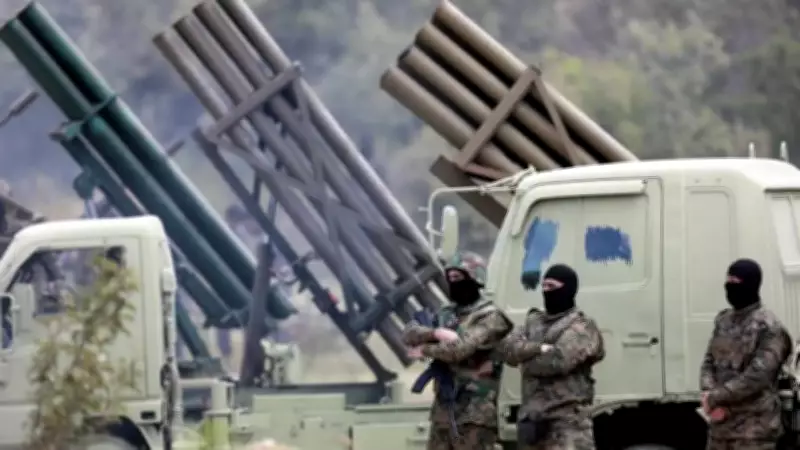
On the infantry front, Hezbollah fighters are equipped with modern small arms and support weapons. Russian-made AK-103 rifles are standard issue, providing reliability and firepower in combat situations. The AGS-17 light grenade launcher, often mounted on PKM-type machine guns, adds suppressive fire capabilities, while the Iranian-made M-46 artillery gun offers long-range bombardment potential. Multiple-barrel rocket launchers, as seen in training exercises, underscore Hezbollah's capacity for sustained rocket attacks, which have been a hallmark of past confrontations with Israel.
Lebanon's Military Capabilities and Regional Implications
Beyond Hezbollah, Lebanon's official military, the Lebanese Armed Forces (LAF), plays a role in the Israel-Lebanon tensions, though its capabilities are more limited compared to the militant group. The LAF has traditionally focused on internal security and border defense, with equipment that includes aging tanks and artillery. However, in the context of escalating tensions, the LAF's posture could influence the dynamics of any conflict, potentially acting as a stabilizing force or becoming entangled in hostilities. Lebanon's government faces the challenge of balancing Hezbollah's influence with national security interests, adding complexity to the regional power struggle.

The resurgence of Israel-Lebanon tensions raises critical questions about the sustainability of a full-scale war. Hezbollah's arsenal, while advanced, may face logistical and supply chain challenges in a prolonged conflict, especially given international sanctions on Iran. Conversely, Israel's military superiority, including its Iron Dome defense system and air force, presents a significant deterrent. The broader Middle East context, with ongoing conflicts and diplomatic efforts, further complicates the situation, making any escalation a matter of global concern.
Conclusion: Navigating a Precarious Security Landscape
As Israel-Lebanon tensions flare again, the detailed examination of Hezbollah's arsenal and Lebanon's military hand reveals a precarious security landscape. Hezbollah's diverse weapons, from drones to missiles, highlight its evolution into a formidable non-state actor, while Lebanon's official forces add another layer to the regional calculus. The potential for miscalculation or escalation remains high, underscoring the need for diplomatic engagement and conflict resolution mechanisms. In this volatile environment, understanding the military capabilities on both sides is essential for assessing risks and fostering stability in the Middle East.