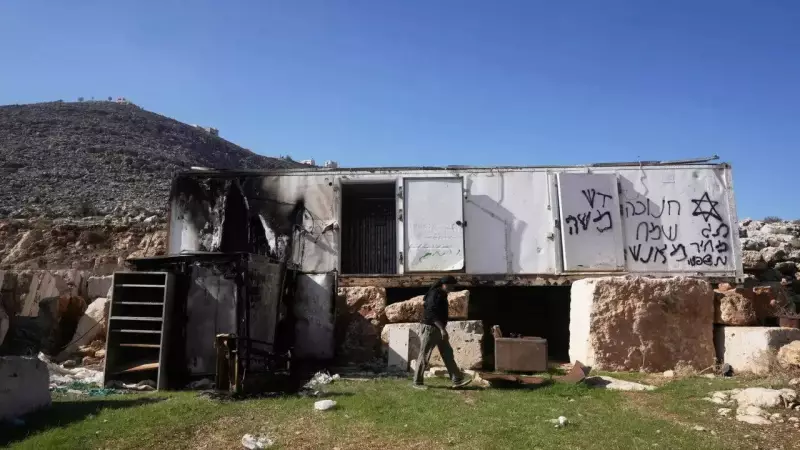
In a significant move that is set to escalate regional tensions, Israel's security cabinet has given the green light for the establishment of 19 new settlements in the occupied West Bank. This decision, taken on Sunday, marks a continuation of Israel's expansion within the Palestinian territory and directly challenges international calls for restraint.
Strategic Expansion and Political Rhetoric
According to a statement from Israel's Finance Minister, Bezalel Smotrich, this latest approval brings the total number of sanctioned settlements to 69. Announcing the move, Smotrich framed it as a national security imperative. "On the ground, we are blocking the establishment of a Palestinian terror state," he stated, adding, "We will continue to develop, build, and settle the land of our ancestral heritage, with faith in the justice of our path."
His office further detailed that the newly approved settlements are situated in areas described as "highly strategic." Notably, two of them—Ganim and Kadim in the northern West Bank—are slated for re-establishment after being dismantled approximately two decades ago.

Surge in Settlement Activity and International Reaction
This expansion occurs against a backdrop of heightened violence in the West Bank since the Gaza war began in October 2023. Israel has occupied the territory since the 1967 war, and today, over 500,000 Israeli settlers live there alongside roughly three million Palestinians.
The timing and scale of this decision are particularly striking. A recent United Nations report indicates that Israel's settlement expansion has reached its highest level since 2017, when the UN began systematically tracking the data. UN Secretary-General Antonio Guterres, quoted by AFP, emphasized that "these figures represent a sharp increase compared to previous years."
Defying International Diplomacy and Warnings
Israel's move comes even as its key ally, the United States, is actively pushing for progress on a Gaza ceasefire. The US-brokered plan, which took effect on October 10, includes a potential pathway toward the establishment of a Palestinian state—a prospect directly contradicted by the new settlement approvals.
Adding to the diplomatic pressure, former US President Donald Trump recently issued a stark warning to Israel in an interview with Time magazine. He cautioned against any move to annex the West Bank, stating unequivocally that "Israel would lose all of its support from the United States if that happened." The current Israeli government's decision to press ahead with significant settlement expansion appears to test the limits of that warning and the broader international consensus, which largely views the settlements as illegal under international law.
The approval of these 19 settlements solidifies Israel's footprint in the West Bank and presents a major obstacle to any future negotiations aimed at a two-state solution, ensuring the issue remains a central flashpoint in the protracted Israeli-Palestinian conflict.