

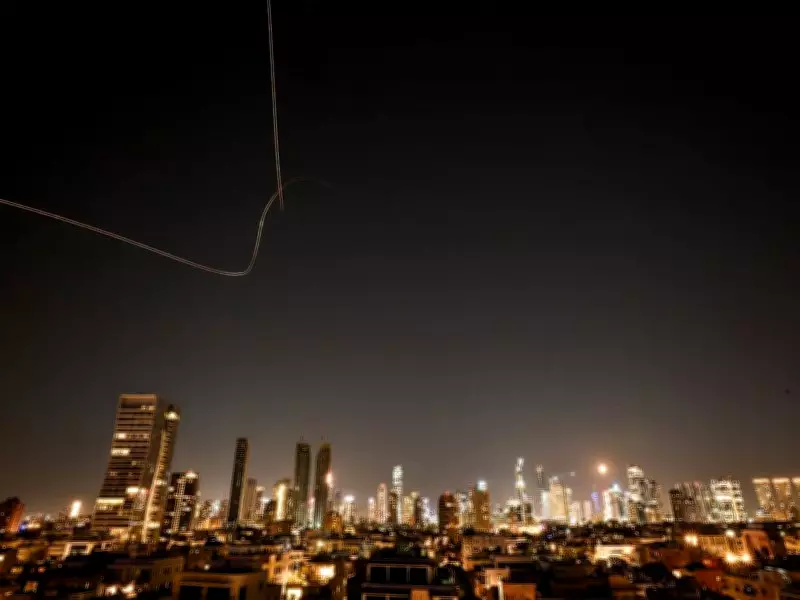
Israel Conducts Military Strikes in Iran, Intercepts Missiles Amid Escalating West Asia Conflict
In a significant escalation of hostilities in West Asia, Israel has conducted targeted military strikes on locations in Tehran and Tabriz, Iran, while successfully intercepting a barrage of Iranian missiles. This development marks a direct confrontation between the two nations, heightening fears of a broader regional conflict and destabilizing an already volatile area.
Details of the Strikes and Interceptions
Israeli forces executed precision strikes on strategic sites in Tehran, Iran's capital, and Tabriz, a major city in northwestern Iran. The operations were reportedly aimed at military and infrastructure targets linked to Iran's missile and drone programs. Concurrently, Israel's air defense systems, including the Iron Dome and other advanced technologies, intercepted multiple missiles launched from Iran towards Israeli territory. The interceptions prevented potential casualties and damage, showcasing Israel's defensive capabilities in the face of aggressive actions.
Background and Regional Implications
The strikes and interceptions occur against a backdrop of long-standing tensions between Israel and Iran, fueled by geopolitical rivalries, proxy conflicts, and nuclear concerns. Iran has historically supported groups hostile to Israel, such as Hezbollah in Lebanon and Hamas in Gaza, while Israel views Iran's military buildup as an existential threat. This direct military engagement could exacerbate conflicts across West Asia, affecting neighboring countries and international relations. The situation underscores the fragility of peace efforts and the risk of miscalculation leading to wider warfare.

International Reactions and Diplomatic Efforts
Global powers, including the United States, European Union, and United Nations, have expressed deep concern over the escalation, calling for immediate de-escalation and diplomatic dialogue. The U.S., a key ally of Israel, has reiterated its commitment to regional stability but urged restraint from all parties. Diplomatic channels are being activated to mediate and prevent further violence, though the complexity of the conflict poses challenges to swift resolution. The international community is monitoring the situation closely, with potential impacts on oil markets, security alliances, and humanitarian conditions in the region.
Analysis of Military and Strategic Outcomes
From a military perspective, Israel's ability to strike deep within Iran and intercept missiles demonstrates its technological superiority and strategic reach. However, Iran's missile launch indicates its willingness to retaliate and project power, despite facing economic sanctions and internal pressures. The conflict highlights the evolving nature of warfare in West Asia, where cyber attacks, drone warfare, and missile defenses play increasingly critical roles. Analysts warn that continued hostilities could lead to a protracted conflict, with implications for global security and economic stability.
Key Points:- Israel conducted strikes in Tehran and Tabriz, targeting Iranian military assets.
- Israeli defenses intercepted Iranian missiles aimed at its territory.
- The escalation raises risks of a broader regional war in West Asia.
- International calls for de-escalation and diplomacy are intensifying.
- The conflict underscores the strategic military capabilities of both nations.
In summary, the Israel-Iran confrontation has entered a new phase with direct strikes and missile interceptions, threatening to unravel regional stability. As tensions simmer, the world watches anxiously, hoping for a peaceful resolution to avert a larger catastrophe in West Asia.






