Kyiv's Bitter Winter: A City Frozen Yet Hopeful Amid Global Negotiations
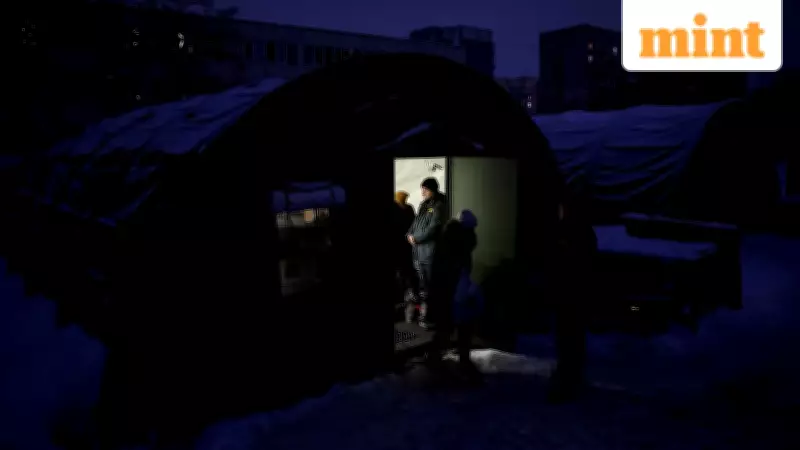
In the Troyeshina district of Kyiv, electricians are hailed as saviors one moment and targets of public fury the next. For over a week, this working-class suburb of 300,000 residents has endured temperatures plunging to -20°C, with central heating completely knocked out. The strain on improvised stoves has caused wiring to fray and surge, leading to burnt-out connections that utility workers desperately patch. Tragically, at least two electricians have lost their lives in this perilous effort.
Nina Svyrydovych, a utility manager, describes the emotional rollercoaster: "People hope we will deliver light," she says, noting how her team is often greeted with reverence. Yet, frustration boils over, as seen on January 28th when dozens of residents blocked a road to prevent workers from leaving until police intervened. This collapse stems directly from Russia's relentless bombing of Ukraine's energy infrastructure, depleting reserves and balancing capacities.
The Devastating Impact of Russia's Energy War
The crisis escalated on January 24th when Russia targeted and disabled Troyeshina's thermal power plant, Kyiv's largest. To prevent pipes from freezing and bursting, municipal engineers were forced to drain the entire heating system. Although partial operations resumed in early February, engineers raced against time as temperatures hit -25°C, battling to avert a full-scale disaster.

Maksym Bakhmatov, Troyeshina's chief administrator, outlines the grim progression: "Catastrophe comes in stages. First water, then heating, then electricity, and finally sewage." Already, residents in one Kyiv suburb report fecal matter in bathtubs, highlighting the dire sanitation issues. The bombardment appears aimed at inflicting maximum misery, potentially to influence ongoing ceasefire negotiations.
Abu Dhabi Talks: A Fragile Path to Compromise
Against this backdrop of suffering, American, Russian, and Ukrainian negotiators convened in Abu Dhabi on February 1st, with follow-up meetings on February 4th and 5th. A shake-up in Ukraine's team, now led by pragmatic former military intelligence chief Kyrylo Budanov, has injected sharper focus into the discussions. A significant prisoner exchange is anticipated soon, but broader progress hinges on Vladimir Putin's stance.
Sources close to the Ukrainian team reveal they await feedback on whether Putin is open to compromise or intends to escalate the war. Core unresolved issues persist: Russia's acceptance of security guarantees between Ukraine and America, and Ukraine's potential retreat from heavily fortified territories. Putin demands withdrawal, while Ukraine insists a ceasefire should maintain current demarcation lines.
A potential compromise under discussion involves creating a demilitarized zone, possibly overseen by a "Board of Peace" brokered by Donald Trump. A Ukrainian source notes the delicate balance: "Such a deal would have to steer between positions that are indigestible to both societies. We can't resolve it without agreeing on a security system for the region. The Russians cannot simply say: trust us."
Ukraine's Dual Strategy: Negotiation and Preparation
Ukrainian President Volodymyr Zelensky has warned that Russia's renewed attacks may prompt a "correction" in Ukraine's negotiation approach. No major breakthrough is expected before March, when Russia's winter offensive concludes and economic pressures may intensify. Meanwhile, Ukraine is pursuing a two-track strategy.
Plan A involves commitment to American-led negotiations, offering Ukraine potential peace and EU membership, while Russia could gain sanctions relief and new business deals. In parallel, Plan B prepares for continued conflict with a strengthened military. At a January 26th presentation in Kyiv, newly installed Defence Minister Mykhailo Fyodorov showcased a futuristic vision of digitalized warfare using drones and gamer logic, though few generals believe the war will end soon.

Defiance in the Face of Adversity
In Troyeshina, residents brace for Plan B. Svyrydovych reports that people are not panicking but focused on survival: "Everyone knows we need to survive February and half of March. But then we will be heroes." Bakhmatov echoes this defiance: "Putin is mistaken if he thinks Ukrainians will give up because their toilets don't work. We will crap in ditches if we have to—singing 'Putin is a dickhead'. Ukrainians will never give in."
As Kyiv shivers through its darkest winter, the glimmer of hope from Abu Dhabi talks offers a fragile possibility of peace, but the city's resilience underscores a readiness to fight on if diplomacy fails.