

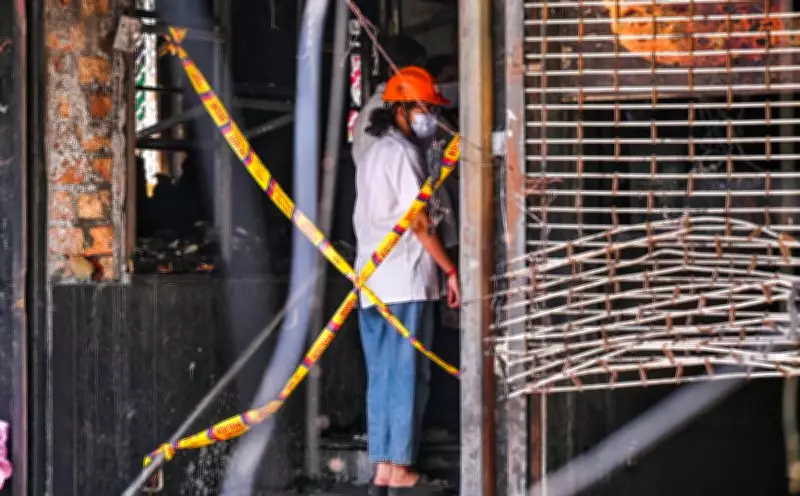
A devastating fire at a hotel-cum-restaurant building in Delhi’s Malviya Nagar has resulted in at least 18 deaths and 20 injuries. Fire officials have pointed to serious structural and fire safety deficiencies that severely hampered evacuation and rescue operations.
Fire Response and Casualties
Abhilash Kumar Malik, Chief Fire Officer (South Zone), reported that the Delhi Fire Service received the first call about the blaze at 8:50 am. Initially, seven fire tenders and an Assistant Divisional Officer were dispatched. As the severity of the situation became clear through multiple distress calls, additional firefighting units and senior officers were rushed to the scene.
“Our teams immediately began firefighting and search operations upon arrival. A total of 39 people were evacuated and shifted to hospitals,” Malik said.

According to details received from Max Hospital, 38 people were admitted, of whom 18 succumbed to their injuries, while 20 are undergoing treatment. Officials confirmed that some foreign nationals were among those rescued. A firefighter sustained minor injuries during the operation.
Structural Deficiencies
Malik stated that a preliminary inspection revealed major structural shortcomings in the building, which comprises a basement, ground floor, and five upper floors. The entire structure had only one staircase and an elevator, while its facade and windows were completely sealed.
“The front facade was entirely covered, and every window, including those in bathrooms, was tightly shut. There was no provision for ventilation or smoke removal,” he said.
According to the fire officer, the building’s design effectively turned it into a “chimney” during the blaze, allowing smoke and heat to rapidly travel upward through the single enclosed vertical passage. “The moment a fire breaks out, dense smoke and intense heat rise quickly to the upper floors, leaving occupants with little or no time to evacuate safely,” Malik explained.
Lack of Fire Protection Systems
He further noted that rescue teams found the building lacked an internal fire protection system, a critical safety feature that could have helped contain the fire and facilitate evacuation. The absence of such systems contributed to the rapid spread of fire and smoke.
Investigation Underway
The building has been sealed, and authorities have launched an investigation into possible violations of fire safety norms, building regulations, and licensing requirements. Officials are examining whether the establishment possessed the necessary approvals and safety clearances and whether any negligence contributed to the high death toll.
The tragedy underscores the critical importance of adherence to fire safety standards, including proper ventilation, multiple egress routes, and functional fire suppression systems, to prevent such disasters in the future.






