Myanmar, a nation once brimming with fragile democratic hope, has descended into a brutal decade of turmoil, marked by a landmark election, a devastating military coup, and a spiraling civil conflict. The period since 2015 has seen the country swing from cautious optimism to widespread violence and humanitarian catastrophe.
The Democratic Interlude and Its Swift Unraveling
The year 2015 was a watershed moment. In a historic general election, the National League for Democracy (NLD), led by the iconic Aung San Suu Kyi, secured a landslide victory. This ended decades of direct military rule, though the army, known as the Tatmadaw, retained significant constitutional power and control over key ministries.
Suu Kyi's government, however, faced immediate and severe international criticism, particularly for its handling of the Rohingya crisis. In 2017, a brutal Tatmadaw crackdown in Rakhine State forced over 700,000 Rohingya Muslims to flee to Bangladesh, an action labeled as genocide by several international bodies. Suu Kyi's defense of the military at the International Court of Justice tarnished her global reputation.

The next major test came with the November 2020 general election. The NLD scored an even more decisive victory than in 2015. The military-backed opposition party, the Union Solidarity and Development Party (USDP), suffered a humiliating defeat. Refusing to accept the results, the Tatmadaw made unsubstantiated claims of widespread electoral fraud, setting the stage for a dramatic power grab.
The 2021 Coup and the Rise of Armed Resistance
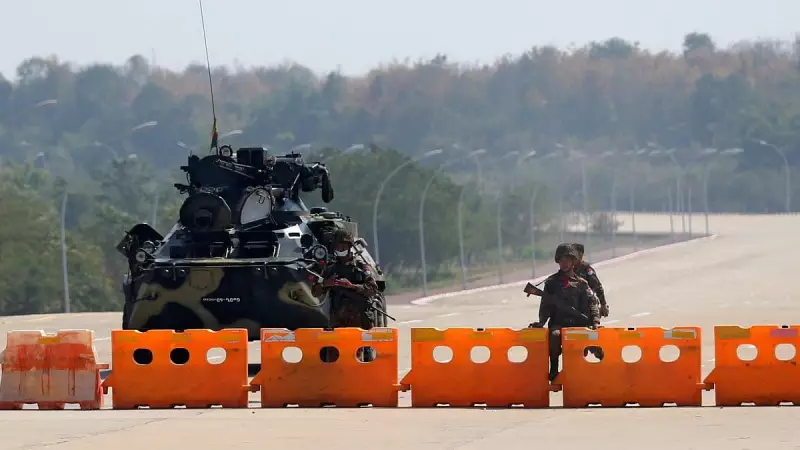
On February 1, 2021, the Myanmar military seized absolute power in a sudden coup. They detained State Counsellor Aung San Suu Kyi, President Win Myint, and other senior NLD officials. Commander-in-Chief Senior General Min Aung Hlaing declared a state of emergency, handing power to himself.
The coup triggered a massive, nationwide Civil Disobedience Movement (CDM), with millions taking to the streets in peaceful protests. The military responded with escalating and deadly force, killing hundreds of unarmed civilians. This brutal crackdown shattered any hope of a peaceful resolution and fueled the birth of a new, determined armed resistance.
Former activists, protesters, and ordinary citizens fled to border regions and jungle areas to receive military training. They formed hundreds of local People's Defence Forces (PDFs). Crucially, these new forces allied with several of Myanmar's long-established Ethnic Armed Organisations (EAOs), which have been fighting for autonomy for decades. This alliance transformed scattered protests into a coordinated civil war.
A Nation Engulfed in Conflict and Humanitarian Crisis
Three years after the coup, the conflict has intensified dramatically. The Tatmadaw, facing unprecedented losses on multiple fronts, has resorted to scorched-earth tactics, including airstrikes and artillery bombardments on civilian areas. In late 2023, a major offensive by an alliance of three EAOs in northern Shan State captured numerous towns and key border trade hubs, dealing a significant strategic and economic blow to the junta.
The human cost is staggering. The United Nations reports that over 2.6 million people are internally displaced, with thousands more fleeing across borders. The economy is in ruins, and humanitarian access is severely restricted. The junta's recent enforcement of a conscription law has further terrified the population and driven more young people into the arms of the resistance.
Internationally, the junta faces isolation and sanctions, though support from neighbors like China and Russia provides a lifeline. The opposition National Unity Government (NUG), formed by ousted lawmakers and activists, operates in exile and claims legitimacy, but it struggles to gain full international recognition.
A Decade of Lost Hope and an Uncertain Future
The decade that began with a historic democratic transition has ended in a devastating multi-front war. The initial hopes of 2015 have been completely erased. The country now stands as one of the world's most complex and violent conflict zones.

The future remains deeply uncertain. The military shows no sign of willingness to negotiate, and the resistance is determined to fight until the junta is toppled. With no clear path to a political solution, the people of Myanmar are caught in a protracted struggle, paying the heaviest price for a conflict that has reshaped their nation and reversed a decade of progress.