

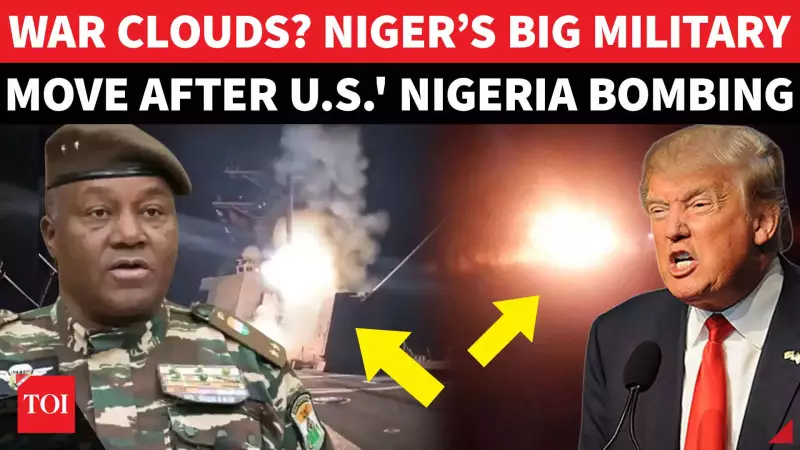
Shockwaves from a recent American military action in West Africa are reverberating across the Sahel region, prompting neighbouring nations to brace for potential fallout. The trigger was a decisive move by US President Donald Trump, who authorised airstrikes against targets linked to the Islamic State (ISIS) in northern Nigeria on December 27, 2025.
Niger's Swift Military Response to Border Threats
In immediate reaction to the escalating situation, the government of Niger, which shares a border with the affected zone in Nigeria, has taken a significant step. Niger has approved sweeping mobilisation powers, a decree that grants its authorities the ability to rapidly escalate military readiness. This emergency measure includes provisions for the requisition of citizens and assets, allowing for a swift response to any spillover violence or security threats emanating from the conflict next door.
The timing of this mobilisation is critical. It coincides with the formal activation of a new joint counterterrorism force by the so-called "Sahel Alliance" of Niger, Mali, and Burkina Faso. This tri-nation force represents a regional effort to combat jihadist insurgencies, but its launch is now overshadowed by the fresh instability introduced by external intervention.

Geopolitical Realignments in the Sahel
The crisis has further highlighted the shifting geopolitical allegiances in the region. Niger's current military leadership, which is seen as leaning towards Russia, has been actively distancing itself from traditional Western partners like France and the United States. This context makes the U.S. airstrikes in a bordering nation a particularly sensitive event, viewed with deep suspicion by the junta in Niamey.
Authorities in Niger are now explicitly preparing for the consequences. With the U.S. strike zone directly bordering their nation, the primary concern is a potential influx of militants, retaliatory attacks, or a general escalation of violence that could easily cross the porous desert frontiers. This has raised alarms not just in Niger but across the entire Sahel belt, a region already grappling with severe poverty and persistent terrorist threats.
Regional Destabilisation and Broader Implications
The fear of regional destabilisation is no longer theoretical. The combination of a major U.S. military action and the immediate, robust response from a Russia-aligned neighbour has created a tinderbox scenario. Analysts warn that the Sahel is at risk of becoming a new front for proxy tensions, where local insurgencies become entangled with great power competition.
The move by the Trump administration, ordered on December 27, 2025, marks a significant and risky escalation of direct U.S. involvement in West African security. While aimed at ISIS targets, the long-term consequences appear to be pushing regional states towards further militarisation and away from Western-led counterterrorism cooperation. The coming days will test the readiness of the new Sahel joint force and the resolve of nations like Niger to secure their borders against a multifaceted threat.






