

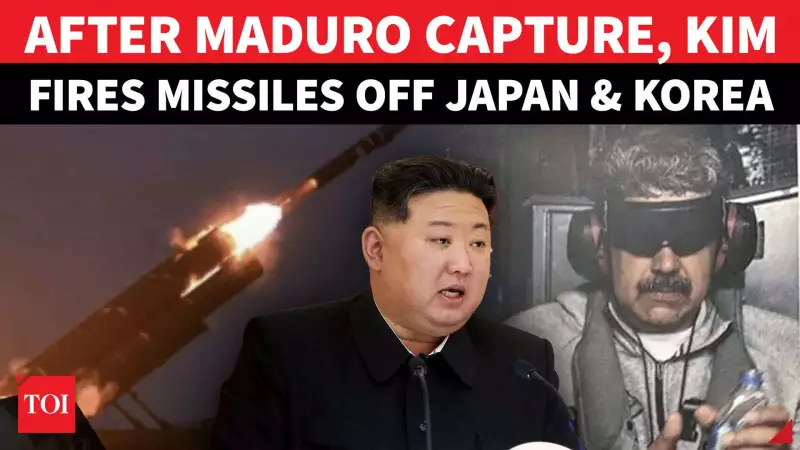
In a significant escalation of geopolitical tensions, North Korea launched multiple ballistic missiles into the sea between the Korean peninsula and Japan on January 4, 2026. This provocative act came mere hours after the United States successfully captured Venezuelan President Nicolás Maduro, marking a dramatic day in international affairs.
A Coordinated Display of Military Might
The missile tests, which involved at least two ballistic missiles, represent Pyongyang's first such launch in two months. The timing is seen as highly strategic by global analysts. It occurred while South Korean President Lee Jae-myung was actively engaged in discussions with Chinese leadership, aiming to foster peace and stability on the volatile Korean peninsula.
Experts interpreting the move suggest it serves a dual purpose. Primarily, it is a direct and aggressive signal from Kim Jong-un's regime, demonstrating its military readiness and willingness to act. Secondly, analysts believe the launch is a strong message directed at Beijing, potentially aimed at influencing the ongoing peace dialogue or asserting North Korea's independence in regional power dynamics.

The Venezuelan Precipice: Maduro in US Custody
The missile launches cannot be viewed in isolation. They were directly preceded by the high-stakes operation where U.S. forces captured Venezuelan President Nicolás Maduro. According to reports, the operation, dubbed 'Op Absolute Resolve,' involved a significant deployment of American air power. Maduro was subsequently transported to the United States, where he was seen handcuffed and escorted by FBI agents, even giving a thumbs-up at a DEA office.
This unprecedented capture of a sitting head of state has sent shockwaves through the international community, triggering protests and celebrations in equal measure. With Maduro's vice president, Delcy Rodríguez, reportedly taking charge in Venezuela, the political future of the oil-rich nation hangs in the balance.
Interlinked Crises and Global Implications
The sequence of events—Maduro's capture followed swiftly by North Korean missile tests—highlights the interconnected nature of modern global crises. While not explicitly linked, the back-to-back occurrences create a perception of a world where flashpoints can ignite simultaneously, testing diplomatic channels and strategic responses.
The North Korean tests, conducted during a sensitive diplomatic visit, underscore the regime's focus on maintaining a posture of strength and defiance. Meanwhile, the U.S. action in Venezuela sets a bold and controversial precedent in international law and interventionist policy. Together, these developments on January 4, 2026, mark a pivotal moment, suggesting a new phase of heightened confrontation and realignment in global politics.






