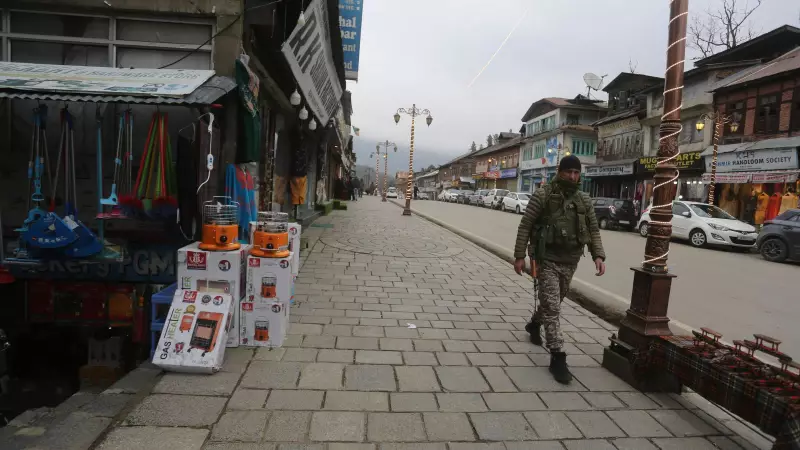
As the harsh chillai kalan winter grips Kashmir, an unusual silence hangs over Pahalgam's famed Lidder Valley. Eight months after one of the deadliest terror attacks on civilians in the region, the echoes of gunfire have been replaced by a profound quiet, punctuated by the struggles of those whose lives were irrevocably changed on April 22, 2025.
A Valley Shadowed by Fear
At the base of the dirt track leading to the Baisaran meadow, Noor Jahan, 40, collects firewood with her six-year-old son. Their movements are restricted now. "Hamein aage jana mana hai, toh hum nahin jaate (We are not allowed to go any further, so we don't)," she says. The forest that once provided for them is now a forbidden zone, a constant reminder of the terror that unfolded uphill.
From her settlement of ten mud huts, Noor Jahan witnessed the horrific aftermath. She saw people, young and old, running shrieking down the hill from the meadow after 26 tourists were killed in the attack. "Since then, I have only seen men in uniform go up and down the hill," she recounts. The memory, like the winter cold, has settled deep, impossible to shake off as the year winds down.

The Deserted Trek to Baisaran
The path to Baisaran, once bustling with over 5,000 ponywallahs ferrying visitors during peak season, is now desolate. Rouf Wani, 36, a pony owner, treks up the shorter 2-km route for the first time since the attack, his steps hesitant. He spots only tyre tracks from Army trucks. The meadow itself remains officially shut, pending a security review.
Wani was about to start a trip uphill that fateful afternoon when he received a panicked call. Disbelieving at first, he raced up the hill in 40 minutes with other pony owners to help fleeing tourists. "I will never forget what I saw... the blood and bodies that weren't whole anymore. Each time I look at this track, I can still see the blood on the gravel from that day," he says, his voice heavy. The attack has shattered his livelihood and his spirit. "As much as I would like to get back to work here, I don't think I can ever take another family to Baisaran."
All signages pointing to Baisaran have been removed or scrubbed off. Near a broken 'Welcome to Baisaran Adventure Trek' board, Wani stops. "Isse aage nahin jayenge (I will not go beyond this point)," he states, adhering to strict security instructions.
Economic Despair and a Flicker of Hope
The repercussions have rippled down to Pahalgam town. Mohammad Yawar, 29, a shawl seller who was outside the park gates during the attack, recalls the moment he mistook gunshots for crackers. He now spends most days idle. "If I ever find the men who were behind the attack, I will make them answer for their lack of humanity," he says angrily.
The economic impact is stark. Mohammad Ayoub, 65, stands at the door of his 85-year-old handicrafts shop on the main market road. "Tourist numbers are down by nearly 80%," he laments. He has seen good years and bad in his 45 years in business, but April 22 marked a grim turning point. "Even in the worst years, it was always understood that tourists would not be harmed. But that changed with the attack in the meadow."
Yet, as New Year dawns, a fragile hope persists. Ayoub points to banners going up for the Pahalgam Winter Festival. He hopes the event will signal a return to normalcy. "I have done enough business, seen enough highs and lows to know that somehow, things always turn around."
This sentiment is tested by the empty hotels and quiet markets this December. However, the presence of a few brave tourists, like a group from Rajasthan who hid their Pahalgam visit from worried families, suggests that the allure of the valley endures, even as it nurses its wounds and awaits a turnaround.