

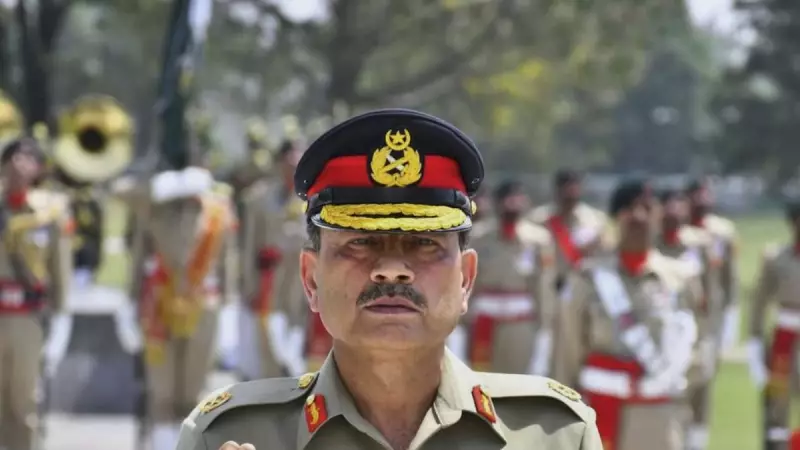
In a significant diplomatic and security development, Pakistan's Chief of Army Staff (COAS), General Asim Munir, delivered a stern and unambiguous message to the Afghan Taliban leadership during his visit to Kabul. The core of his communication was a direct ultimatum: the Afghan interim government must choose between maintaining its relationship with Pakistan or continuing to harbour the banned terrorist outfit Tehreek-e-Taliban Pakistan (TTP). This high-stakes visit took place on Saturday, December 21, 2024.
The Kabul Meeting and Its Stern Message
General Asim Munir's day-long trip to the Afghan capital was marked by crucial meetings with top Taliban figures. He held discussions with the Taliban's Deputy Prime Minister for Political Affairs, Mawlawi Abdul Kabir, and their Defence Minister, Mullah Mohammad Yaqoob. The interactions, described as "important" by Taliban spokespersons, covered a wide range of bilateral issues, including regional security, economic cooperation, and the facilitation of transit trade.
However, the central and most critical point raised by the Pakistani Army Chief was the persistent threat posed by the TTP. General Munir explicitly conveyed that Pakistan expects concrete and verifiable action from the Taliban regime against TTP elements operating from Afghan soil. He emphasized that the group's activities are a major red line for Pakistan's security and that the era of ambiguous or passive support must end. The message framed the issue as a binary choice, linking the future of Pakistan-Afghan relations directly to the Taliban's actions against the TTP.

Background: The Persistent TTP Threat
The Tehreek-e-Taliban Pakistan, an umbrella organization of various militant groups, has been a persistent security challenge for Pakistan for over a decade and a half. The group has been responsible for thousands of deaths across Pakistan. While the Afghan Taliban publicly claims it does not allow its soil to be used against any country, Pakistan and international observers have consistently presented evidence of TTP sanctuaries existing within Afghanistan.
Since the Taliban's return to power in Kabul in August 2021, Pakistan had hoped for a change in this dynamic, given the historical ties between the two Talibans. However, instead of a decline, Pakistan has witnessed a alarming surge in TTP-led attacks, particularly in its northwestern Khyber Pakhtunkhwa province and southwestern Balochistan. This escalation has forced Pakistan's military and political leadership to take a harder, more public stance.
Implications and Regional Repercussions
General Munir's direct ultimatum marks a pivotal moment in the often-fraught relationship between the two neighbours. It signals that Pakistan's patience has worn thin and that it is now willing to publicly pressure the Taliban government on the world stage. This move carries significant implications.
Firstly, it puts the Afghan Taliban in a difficult position. Cracking down on the TTP could alienate factions within their own ranks who see the Pakistani group as ideological brethren. However, ignoring Pakistan's demands risks further isolating the already sanctioned Taliban regime and could lead to heightened cross-border tensions or even unilateral actions by Pakistan.
Secondly, this development is closely watched by other regional players, including China and Iran, who also have security concerns regarding militant spillover from Afghanistan. A firm Pakistani stance could encourage a more coordinated regional approach to holding the Taliban accountable for its counter-terrorism commitments.
The outcome of this diplomatic confrontation will significantly shape the security landscape of South and Central Asia. Will the Afghan Taliban prioritize its ideological affiliations, or will it choose the path of pragmatic state relations with a powerful neighbour? The choice it makes will have consequences far beyond the Durand Line.






