

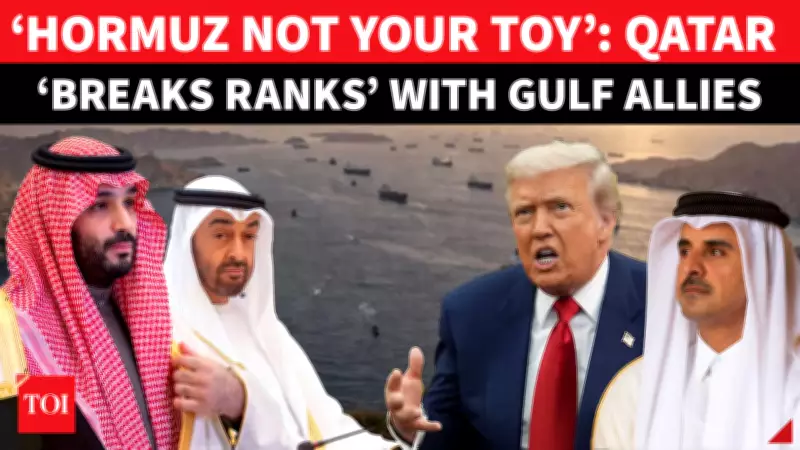
United States ally Qatar has issued a stark warning amid the ongoing blockade of the Strait of Hormuz, a critical maritime chokepoint for global oil shipments. Speaking at a security conference in Singapore, Qatari Minister of State for Defence Affairs Sheikh Saoud bin Abdulrahman Al Thani described the Strait of Hormuz as the “neck of the world,” cautioning that its prolonged closure would create severe economic and security problems far beyond the Middle East region.
Qatar Calls for Dialogue with Iran
The minister argued that the current crisis cannot be resolved through military action alone. He called for direct, open dialogue with Iran, emphasizing that Tehran will always play a central role in determining the waterway's future. “The Strait of Hormuz is not just a regional issue; it is a global concern. Any disruption here will have cascading effects on the entire world economy,” Al Thani stated.
GCC Still Divided on Iran Strategy
Al Thani also revealed that Gulf Cooperation Council (GCC) states are still working toward a common strategy regarding Iran but have yet to reach a unified position. This lack of consensus highlights the complex geopolitical dynamics within the alliance, as member states balance their security concerns with economic ties to Iran.

The warning from Qatar comes at a time of heightened tensions in the region. Iran has reportedly snubbed recent overtures from the United States, including those from former President Donald Trump, further complicating diplomatic efforts. The blockade of the Strait of Hormuz has already led to significant disruptions in global oil supply chains, raising concerns about energy security and potential price spikes.
Global Implications of the Blockade
Analysts warn that a prolonged closure of the Strait of Hormuz could trigger a global recession, as the waterway handles about 20% of the world's oil transit. Countries heavily reliant on Middle Eastern oil, including many in Asia and Europe, are particularly vulnerable. The Qatari minister’s remarks underscore the urgent need for a diplomatic solution to prevent a wider conflict.
While military options remain on the table for some nations, Qatar’s stance reflects a growing consensus among regional powers that dialogue is the only sustainable path forward. The coming weeks will be critical in determining whether diplomatic channels can be reopened or if the situation will escalate further.






