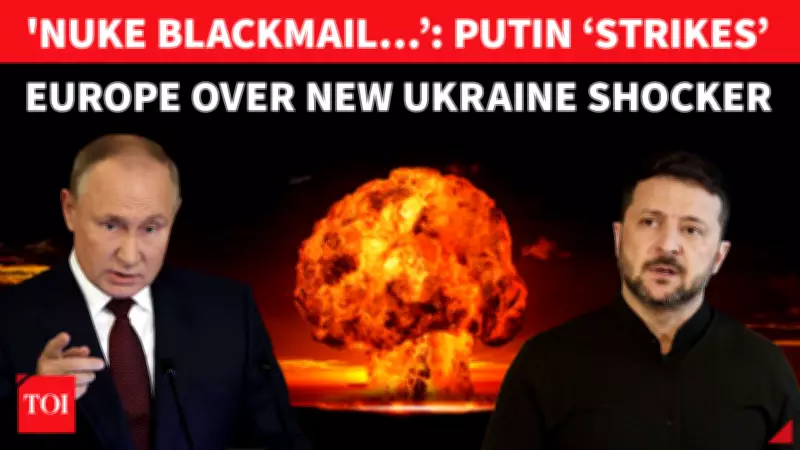
Russia on Wednesday accused Ukrainian President Volodymyr Zelensky of 'sabotaging any and all peace initiatives' and 'creating conditions for a potential nuclear conflict.' The accusation came from Russian Foreign Ministry spokesperson Maria Zakharova, who cited Zelensky's earlier remarks that Ukraine should be granted both NATO membership and nuclear weapons as security guarantees.
Zakharova's Warning to Europe
Zakharova warned that Western Europe runs the risk of becoming the first victim of what she termed 'nuclear blackmail.' She emphasized that Zelensky's statements are not only provocative but also dangerous, as they undermine diplomatic efforts to resolve the ongoing conflict. The spokesperson argued that such rhetoric could escalate tensions to an unprecedented level, potentially drawing in European nations directly into a nuclear standoff.
Context of the Accusations
The Russian official's remarks came in response to Zelensky's recent interview where he suggested that without NATO membership, Ukraine would need nuclear weapons to defend itself. Russia has consistently opposed Ukraine's NATO aspirations and views any nuclear capability in Ukraine as a direct threat to its national security. Zakharova claimed that these statements are part of a pattern of behavior aimed at derailing peace talks and provoking a wider conflict.

Zakharova further stated that Russia remains committed to diplomatic solutions but will not tolerate what it perceives as blackmail. She called on international partners to urge Ukraine to abandon what she described as 'reckless and irresponsible' plans. The warning comes amid heightened tensions between Russia and the West over the war in Ukraine, with both sides accusing each other of escalating rhetoric.
International Reactions
Western nations have largely dismissed Russia's accusations as propaganda. The United States and European Union have reiterated their support for Ukraine's sovereignty and territorial integrity, while cautioning against any nuclear posturing. Analysts suggest that the Russian warning may be an attempt to shift blame for the stalled peace process onto Ukraine. Meanwhile, Ukraine has denied any intention to develop nuclear weapons, stating that its focus remains on conventional defense and integration with Western security structures.
The situation remains fluid, with no immediate signs of de-escalation. The international community continues to monitor developments closely, urging both sides to exercise restraint and return to meaningful dialogue.