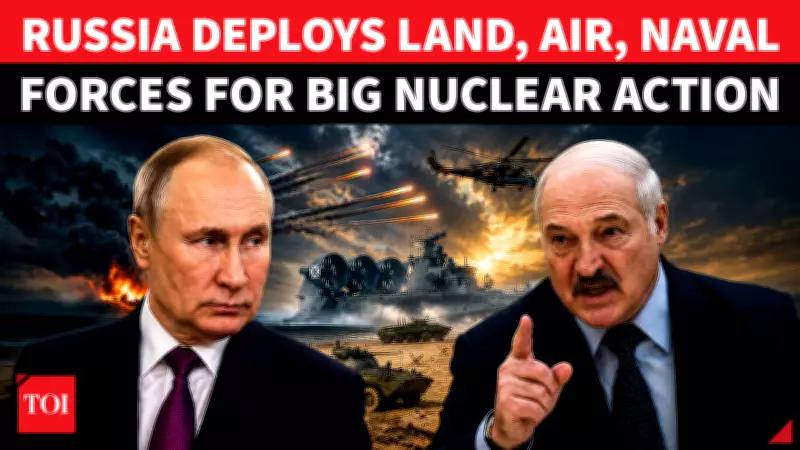
Russia and Belarus have officially launched a massive, coordinated tactical nuclear weapons exercise, moving the countdown from theory to reality. The scale of the drills is unprecedented: 64,000 troops, 200 missile launchers, 73 warships, and 13 submarines—including 8 strategic nuclear submarines—are actively practicing deployment operations.
Nuclear Show of Force
This atomic show of force comes just hours after Lithuanian Foreign Minister Kęstutis Budrys shocked Moscow by declaring that NATO has the tools to completely "level" and "raze to the ground" Russia's military fortress in Kaliningrad. The statement has escalated tensions between the alliance and Russia, prompting this large-scale response.
Details of the Drills
The exercise involves a wide range of military assets, including ground forces, naval vessels, and strategic bombers. The 64,000 troops are drawn from both Russian and Belarusian armed forces, operating in a coordinated manner to simulate nuclear conflict scenarios. The 200 missile launchers include Iskander and other tactical systems capable of delivering nuclear warheads.

Naval participation is significant, with 73 warships and 13 submarines taking part. Among these, 8 strategic nuclear submarines are a key component, capable of launching intercontinental ballistic missiles. The drills are designed to test readiness and response times in a high-stakes environment.
Regional Implications
The timing of the exercise is critical, as it follows Budrys's provocative remarks about Kaliningrad. Kaliningrad is a heavily militarized Russian exclave situated between Poland and Lithuania, both NATO members. The Lithuanian foreign minister's comments have been seen as a direct challenge to Russian sovereignty in the region.
Moscow has condemned the statements as inflammatory and a threat to regional stability. The exercise serves as a demonstration of Russia's nuclear capabilities and its willingness to defend its interests, including its Baltic exclave.