

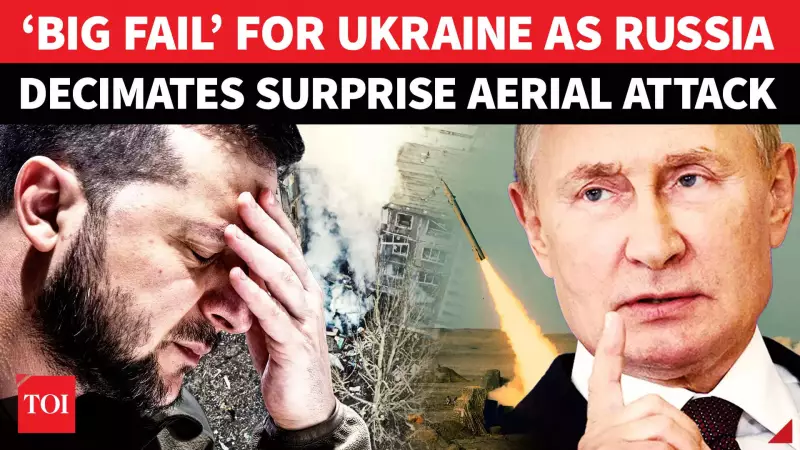
In a significant escalation of aerial warfare, Russian air defence forces have reportedly decimated a major Ukrainian drone offensive, claiming to have destroyed more than 230 unmanned aerial vehicles (UAVs) in a single day. This dramatic development, announced by the Russian Defence Ministry, comes at a critical juncture as high-stakes peace discussions between the United States and Ukraine are underway.
Russian Air Defence Inflicts Heavy Losses
According to official statements from Moscow, Russian air-defence systems successfully engaged and eliminated over 230 Ukrainian drones that were attempting to penetrate Russian airspace. The scale of the interception suggests a coordinated and large-scale drone assault by Ukrainian forces, which was met with what Russia describes as "overwhelming firepower." The incident, reported on December 1, 2025, marks one of the most substantial single-day losses for Ukraine's drone fleet since the conflict began.
Beyond the drones, the Russian ministry made another significant claim: the interception of a U.S.-made HIMARS (High Mobility Artillery Rocket System) rocket. This action is poised to intensify existing diplomatic tensions with Washington, as it involves the destruction of advanced Western-supplied weaponry directly on the battlefield.

Peace Talks Underway Amid Mounting Pressure
This military showdown occurs against the backdrop of sensitive U.S.-Ukraine peace discussions reportedly taking place in Florida. The staggering loss of aerial assets is seen as a major strategic setback for Kyiv, increasing the pressure on President Volodymyr Zelensky to seek a negotiated settlement with his Russian counterpart, President Vladimir Putin.
Analysts suggest that the demonstrated efficacy of Russia's integrated air defence network could force a reassessment of Ukraine's tactical reliance on drone warfare. The ability to counter such a massive swarm simultaneously showcases significant advancements in Russian counter-UAV capabilities.
Broader Implications and Regional Tensions
The incident has immediate and far-reaching consequences:
- Military Strategy: Ukraine's "drone gamble" appears to have faltered, potentially necessitating a shift in its approach to long-range strikes and reconnaissance.
- Diplomatic Strain: The downing of the HIMARS rocket adds another layer of complexity to the already fraught relationship between Russia and the United States.
- Peace Process: The battlefield reality may influence the dynamics of the ongoing talks, with Kyiv's negotiating position potentially weakened by this demonstrated vulnerability.
As the world watches, the combination of a decisive military action and concurrent diplomatic manoeuvres highlights the volatile and interconnected nature of modern conflict, where events on the front lines can instantly alter the calculus at the negotiation table.






