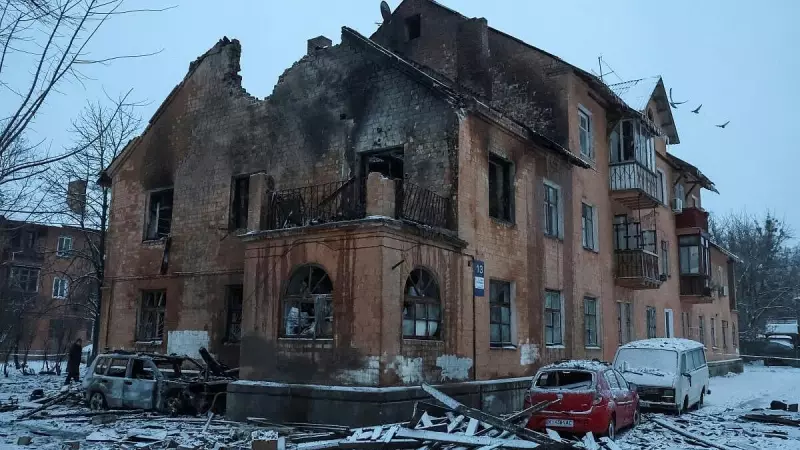
In a significant escalation of military claims, Russia has announced it deployed its advanced Oreshnik hypersonic missile against targets in Ukraine. This development coincides with a war of words, as Ukraine has vehemently denied a separate Russian allegation that Ukrainian drones attempted to strike one of President Vladimir Putin's residences.
Russia's Hypersonic Missile Claim and Ukrainian Rebuttal
The Russian military stated that it successfully fired the Oreshnik hypersonic missile at Ukrainian positions. Hypersonic weapons, known for their blistering speed and manoeuvrability, represent a top-tier capability in modern warfare, making them extremely difficult to intercept with existing air defence systems.
Simultaneously, Moscow levelled a serious accusation, claiming that at the end of December, Ukrainian forces tried to attack one of Putin's official residences located in the Novogorod region. Russian authorities presented this alleged incident as a direct provocation.

Kyiv Calls Allegation an "Absurd Lie"
Ukrainian officials have issued a firm and swift denial regarding the alleged drone attack. A spokesperson for Kyiv labelled the Russian claim "an absurd lie". The Ukrainian government interprets this accusation as a deliberate fabrication with a clear strategic purpose.
According to the Ukrainian perspective, this narrative is being pushed by Russia to sabotage already troubled peace talks. By portraying Ukraine as attacking the Russian president's home, Moscow could be attempting to create a pretext for further escalation or to stall diplomatic negotiations that were already facing significant challenges.
Implications for the Conflict and Diplomacy
The twin announcements—one about advanced weaponry and the other about a direct alleged attack on the Russian leadership—mark a dangerous new phase in the information war surrounding the conflict. The claim of using the Oreshnik missile, if verified, signals Russia's willingness to deploy its most sophisticated arsenal.
More critically, the exchange over the drone strike allegation threatens to poison the well for any future diplomacy. Peace talks, which have been stalled and fragile, now face an additional layer of mistrust and accusation. Ukraine's stance is that Russia is manufacturing crises to justify continued or intensified military action, thereby derailing any potential path to negotiation.
The international community, including agencies like Reuters which reported these developments, is closely monitoring the situation. The date of these claims, 09 January 2026, underscores the prolonged and evolving nature of this conflict, where battlefield actions and informational warfare are deeply intertwined.