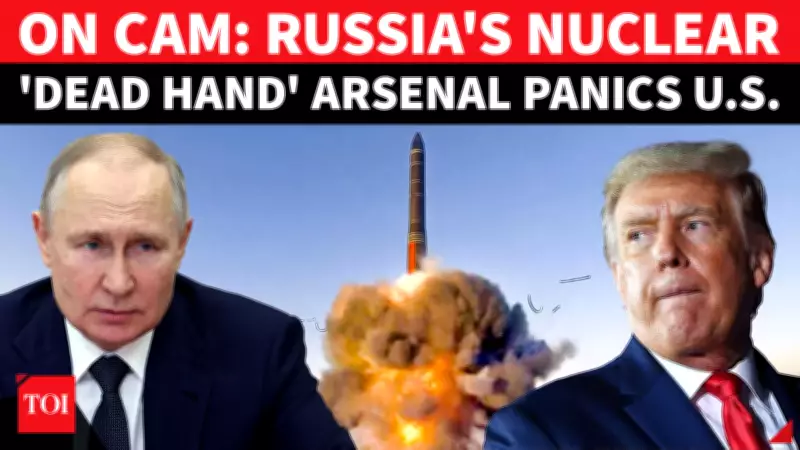
Russia has launched one of its largest strategic nuclear exercises in recent years, involving tens of thousands of troops, missile launchers, warships, submarines, and nuclear-capable aircraft near NATO's borders. The drills, conducted jointly with Belarus, are widely being viewed as a powerful display of Moscow's nuclear deterrence strategy amid rising tensions with the West.
Massive Military Mobilization
The Russian Defence Ministry released footage showing road-mobile missile launchers, including Iskander-M systems, taking part in high-alert combat exercises involving the deployment and preparation of nuclear-capable munitions. The exercises also included elements of Russia's Strategic Missile Forces, long-range aviation, and naval nuclear assets from the Northern and Pacific Fleets. Approximately 64,000 troops are involved in the drills, which also feature missile launchers, warships, submarines, and nuclear-capable aircraft.
Strategic Nuclear Deterrence
This exercise is one of the largest strategic nuclear drills conducted by Russia in recent years. It is designed to test the readiness and effectiveness of Russia's nuclear triad, which includes land-based missiles, strategic bombers, and submarine-launched missiles. The involvement of Belarus underscores the close military cooperation between the two allies, with Belarus hosting Russian tactical nuclear weapons earlier this year.

Rising Tensions with NATO
The drills come at a time of heightened tensions between Russia and NATO, exacerbated by the ongoing conflict in Ukraine and recent NATO exercises near Russian borders. NATO has condemned the Russian exercises as provocative and destabilizing, while Russia insists they are purely defensive in nature. The exercises are seen as a signal to NATO that Russia is prepared to use nuclear weapons if necessary to defend its territory and interests.
International Reactions
The international community has reacted with concern to the Russian nuclear exercises. NATO Secretary General Jens Stoltenberg called for restraint and dialogue, warning that such drills increase the risk of miscalculation and escalation. The United States and European Union have also expressed alarm, with the US State Department urging Russia to de-escalate and engage in arms control talks. Meanwhile, Belarusian President Alexander Lukashenko has praised the exercises as a demonstration of the strength of the Russia-Belarus alliance.
In related news, tensions have also flared in other hotspots around the world, including US military operations against Iranian oil tankers, Iranian missile threats against Israel and the US, and rising tensions in Cuba. These developments highlight the increasingly volatile global security environment, with multiple flashpoints threatening to spiral out of control.