

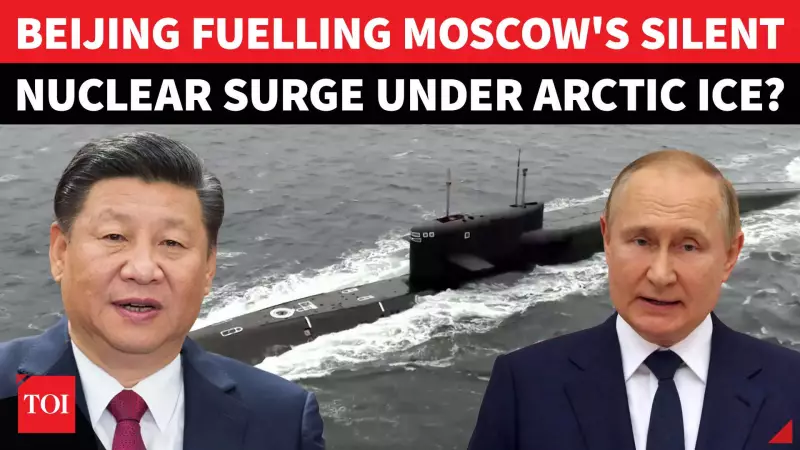
In a significant escalation of global naval capabilities, Russia has announced the development of its next-generation strategic nuclear submarines. This move comes shortly after the United States Navy, under President Trump, revealed plans for a new class of colossal surface warships. The simultaneous advancements by the world's major powers signal the dawn of a high-stakes era in maritime warfare, where dominance over the Arctic and the world's oceans is becoming a critical factor in strategic deterrence.
Russia's Arctic-Optimised Submarine Power
Moscow is pushing forward with a program to create successors to its current Borei-class nuclear submarines. The Kremlin's plan focuses on vessels specifically designed for operations in the challenging Arctic environment. These future submarines are expected to be equipped with advanced autonomous underwater vehicles and what Russian officials describe as "weapons with no global analogues." This development is a clear effort to reinforce and extend Russia's established dominance in undersea warfare, particularly in the strategically vital and resource-rich Arctic region.
America's Massive Surface Response: The Trump-Class
On the other side of the globe, the United States is making a formidable surface-level counter. The U.S. Navy has announced the Trump-class battleships under the current administration. These warships are touted to be the largest surface combatants constructed since World War II. Their design promises unprecedented firepower, incorporating hypersonic missiles capable of carrying nuclear warheads alongside numerous cells for launching Tomahawk cruise missiles. This represents a monumental shift in surface naval projection of power.

A Tripartite Naval Arms Race
The strategic competition is not limited to Russia and the United States. China is also significantly expanding its underwater fleet with the development of its new Type 096 nuclear submarines. This three-way expansion means that all leading global naval powers are investing heavily in both undersea and surface capabilities simultaneously. The convergence of these programs creates a complex and potentially volatile security landscape, where technological advances in one nation quickly prompt responses from the others.
The focus on the Arctic is particularly telling. As climate change opens new sea routes and access to resources, controlling these waters becomes a paramount strategic objective. Russia's emphasis on Arctic-optimised submarines directly addresses this future battlefield. The combination of stealthy, advanced submarines patrolling beneath the ice and massively armed surface ships commanding the open seas is reshaping the very foundations of global military deterrence for the coming decades.






