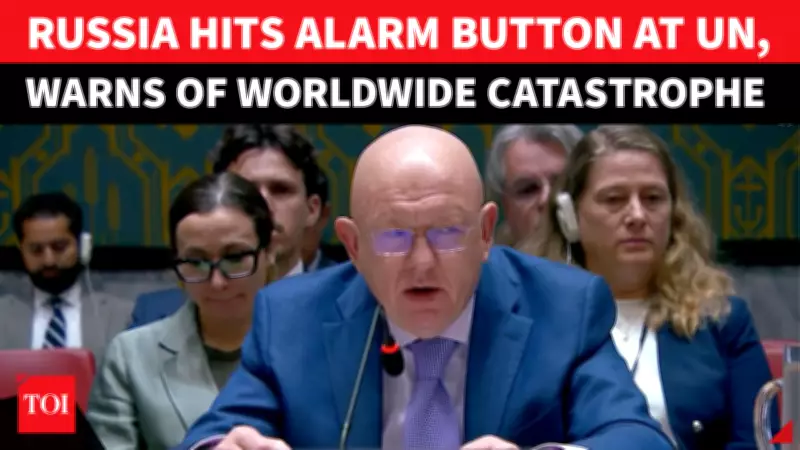
Russia has issued its most severe warning yet to the United Nations Security Council, with its top diplomat accusing Western nations of reckless behavior that threatens global stability. In a fiery address delivered in New York, Russian Ambassador Vasily Nebenzya declared that Western elites have 'lost all restraint,' pushing the planet closer to a global catastrophe than at any point during the height of the Cold War.
Accusations Against Germany
Nebenzya dropped a major bombshell during the debate, accusing Germany of violating its 1990 reunification treaty. He alleged that Berlin is striving to become Europe's dominant military force and has secretly formed a 'nuclear steering group' with France. These actions, he argued, directly contravene the commitments made during Germany's reunification process and undermine European security.
Western Response and Context
The Russian ambassador's remarks come amid heightened tensions between Moscow and Western nations over a range of issues, including the conflict in Ukraine, NATO expansion, and nuclear proliferation. Nebenzya's speech was seen as a direct challenge to the West's influence in global affairs, with Russia positioning itself as a defender of international law against what it perceives as Western overreach.

During the UNSC debate, Nebenzya called on member states to recognize the dangers posed by the current trajectory of international relations. He warned that the actions of Western powers are leading the world toward an irreversible crisis, urging the council to take immediate steps to de-escalate tensions.
Global Implications
The Russian warning has drawn mixed reactions from other UNSC members. While some nations expressed concern over the escalating rhetoric, others dismissed Moscow's claims as an attempt to deflect attention from its own actions in Ukraine and elsewhere. The debate highlighted the deepening divide between Russia and the West, with no clear path toward reconciliation in sight.
As the situation continues to unfold, the international community remains on edge, with many fearing that the current standoff could spiral into a broader conflict. Nebenzya's address serves as a stark reminder of the fragile state of global security and the urgent need for diplomatic engagement to prevent catastrophe.