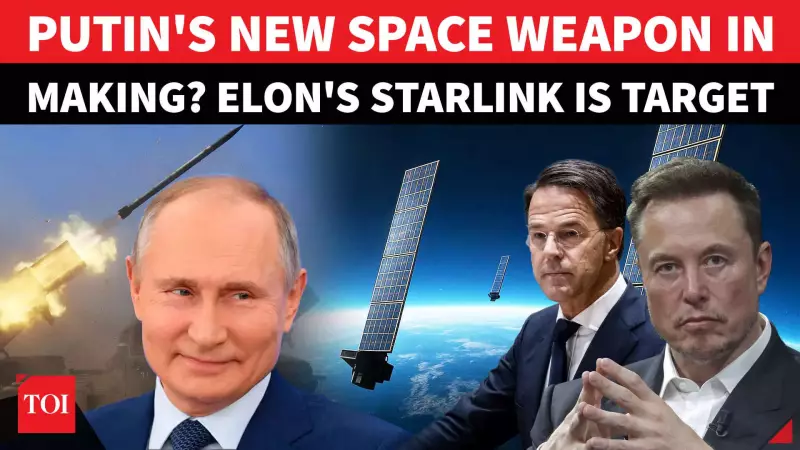
Fresh intelligence assessments from within the NATO alliance have raised alarm over a potential new Russian weapon system designed to target and disable satellite constellations like Elon Musk's Starlink. The reports, emerging in late December 2025, suggest Moscow is exploring a controversial "zone-effect" approach that could flood space with destructive pellets, posing a severe threat to orbital infrastructure globally.
The 'Zone-Effect' Weapon: A New Threat in Low-Earth Orbit
According to details sourced by The Associated Press from two NATO member countries, the proposed Russian system represents a significant escalation in anti-satellite (ASAT) technology. Instead of targeting individual satellites, the concept involves deploying hundreds of thousands of high-density pellets into a specific orbital zone. This cloud of projectiles would be capable of disabling or destroying multiple satellites passing through it simultaneously.
The timing and nature of this intelligence, dated around December 24, 2025, indicate a focused development effort. This weapon is seen as a direct counter to the Starlink network, which has become a cornerstone of Ukraine's military communications and drone warfare capabilities since the Russian invasion. By targeting Starlink, Russia aims to degrade a critical strategic advantage held by Ukrainian forces.

Broader Consequences: Uncontrollable Space Debris and Global Fallout
Military analysts and space security experts are warning of catastrophic secondary effects that extend far beyond the immediate conflict. The primary concern is the creation of an uncontrollable and persistent debris field in low-Earth orbit. Such debris does not discriminate between its intended targets and other satellites, posing a long-term collision risk to space assets operated by Russia, China, the United States, and numerous other nations and private companies.
This scenario revives grim memories of Russia's 2021 anti-satellite missile test, which generated thousands of pieces of trackable debris. That event forced astronauts aboard the International Space Station to take emergency shelter, highlighting the immediate dangers such actions pose to human spaceflight. A "zone-effect" weapon could create a debris problem orders of magnitude larger, potentially rendering certain orbital regions unusable for decades and threatening the long-term sustainability of space operations for all.
Reviving Fears of the Final Frontier's Weaponisation
The intelligence claims have forcefully returned the issue of space weaponisation to the forefront of global security discussions. The development of such an indiscriminate system challenges existing norms and treaties aimed at preserving space as a peaceful domain. It underscores a worrying trend where space is increasingly viewed as a potential battlefield, with commercial satellite networks like Starlink becoming legitimate military targets in times of conflict.
The potential deployment of this weapon would not only impact Ukraine but could trigger a chain reaction of events leading to long-term chaos in Earth's orbit. It threatens vital services that depend on satellites, including global communications, navigation, weather forecasting, and Earth observation. The reports serve as a stark reminder that conflicts on Earth now have the potential to escalate into domains that affect the entire planet's technological infrastructure and future in space.