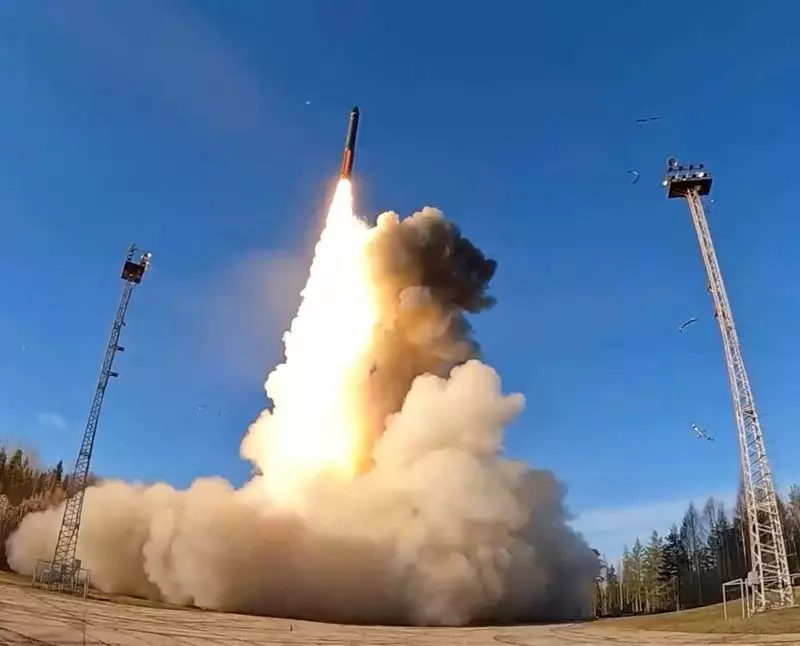
Russia's development of a radical new strategic weapon, the 9M730 Burevestnik cruise missile, is casting a long and ominous shadow over international security frameworks. Touted as a system with virtually unlimited range, this nuclear-powered and nuclear-capable weapon represents a significant escalation in military technology that has analysts and governments worldwide deeply concerned.
What is the Burevestnik 'Skyfall' Missile?
Known within NATO circles by the codename SSC-X-9 "Skyfall", the Burevestnik is an experimental Russian weapon that breaks traditional paradigms. It was first unveiled to the world by President Vladimir Putin in March 2018 during a state-of-the-nation address. The core proposition of the missile is its reported unlimited flight range, achieved through a compact onboard nuclear reactor.
This propulsion system theoretically allows the cruise missile to fly for days at a time, following complex and unpredictable flight paths. Such capabilities are designed specifically to penetrate and evade even the most advanced multi-layered air defence networks operated by nations like the United States.

A Technological Marvel or a Dangerous Gamble?
The engineering behind Burevestnik is as perilous as it is ambitious. The concept of a low-flying cruise missile with a live nuclear reactor in its airframe has led many Western experts to dub it a "Flying Chernobyl." The nickname underscores the catastrophic environmental and safety risks associated with a test failure or accidental crash, which could scatter radioactive material over a vast area.
Beyond the environmental hazard, the military implications are profound. A weapon that can loiter indefinitely, change course unexpectedly, and strike from any direction negates decades of strategic defence planning. It creates a persistent, undetectable threat that is incredibly difficult to counter with existing technology.
Global Security Implications and the Road Ahead
The development of Burevestnik signals a new and dangerous phase in strategic arms competition. It moves beyond mere increases in warhead count to a qualitative leap in delivery systems. This advancement could potentially undermine existing nuclear deterrence balances and trigger a new arms race, as other nuclear powers may feel compelled to develop similar or countervailing technologies.
Key questions remain about the missile's actual deployment status and operational reliability. While Russian state media has showcased the project, independent verification of its successful testing is scarce. The world is now left to grapple with whether the Burevestnik is a genuine game-changer on the global stage or a potent piece of 21st-century Cold War theatrics aimed at projecting power and sowing uncertainty among adversaries.
Regardless of its current readiness, the mere pursuit of such a weapon has already altered strategic calculations. It compels a reassessment of national defence postures and highlights the urgent need for renewed dialogue on arms control in an increasingly unstable geopolitical landscape.