

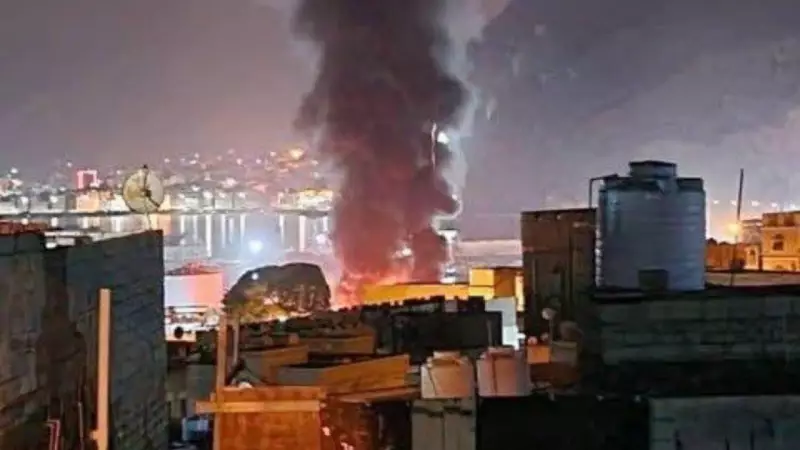
In a significant escalation of internal tensions within the anti-Houthi coalition, Saudi Arabia conducted targeted airstrikes on the Yemeni port city of Mukalla in the early hours of Tuesday. The Saudi military stated the operation aimed to destroy a shipment of weapons that had arrived from the United Arab Emirates (UAE) for the UAE-backed Southern Transitional Council (STC), a separatist group.
A Direct Strike on an Ally's Shipment
The Saudi state news agency provided details, confirming the strikes were launched after two ships from the Emirati port of Fujairah docked in Mukalla. The official statement declared the offloaded weapons posed a direct threat to security and stability, necessitating what it termed a "limited military operation" to eliminate them. As of now, the UAE has not issued any public comment regarding the attack or the allegations.
This military action marks a sharp and public deterioration in relations between Riyadh and Abu Dhabi, who are nominal allies but have long supported different factions within the broader coalition fighting the Iran-aligned Houthi rebels. The Houthis seized the capital, Sanaa, back in 2014, prompting the Saudi-led intervention.

Background: The Struggle for South Yemen
Mukalla is located in Yemen's vast Hadramout region, an area recently captured by the STC. The city lies approximately 480 kilometres northeast of Aden, the current base for anti-Houthi forces. Tuesday's attack was not an isolated event. It followed Saudi airstrikes just last Friday, which regional analysts interpreted as a clear warning to the STC to halt its advances and withdraw from the captured territories of Hadramout and Mahra.
The STC had previously pushed out the Saudi-backed National Shield Forces from these regions. The separatists' growing assertiveness is visibly symbolized by their supporters increasingly raising the flag of the former South Yemen, which existed as an independent nation from 1967 until unification in 1990. Recent demonstrations have actively called for a return to that independent statehood.
Broader Implications for Gulf Rivalry
These moves by the STC have significantly increased friction between Saudi Arabia and the UAE. While the two Gulf powers maintain close diplomatic ties and cooperate within forums like OPEC, they have been engaged in a quiet but intense competition for influence, business opportunities, and strategic control in the region. The Yemen war has become a primary theatre for this rivalry.
The strain is not confined to Yemen. In a parallel development, violence has also escalated in Sudan, another critical Red Sea nation, where Saudi Arabia and the UAE are reportedly backing rival sides in the devastating ongoing conflict. This pattern suggests a widening fissure in the foreign policy objectives of the two traditional partners.
The airstrike on Mukalla underscores the fragile and complex nature of the alliances in Yemen's war. It shifts the focus, at least temporarily, from the fight against the Houthis to the internal power struggle among the groups that were supposed to be united against them, posing new challenges for regional stability.






