

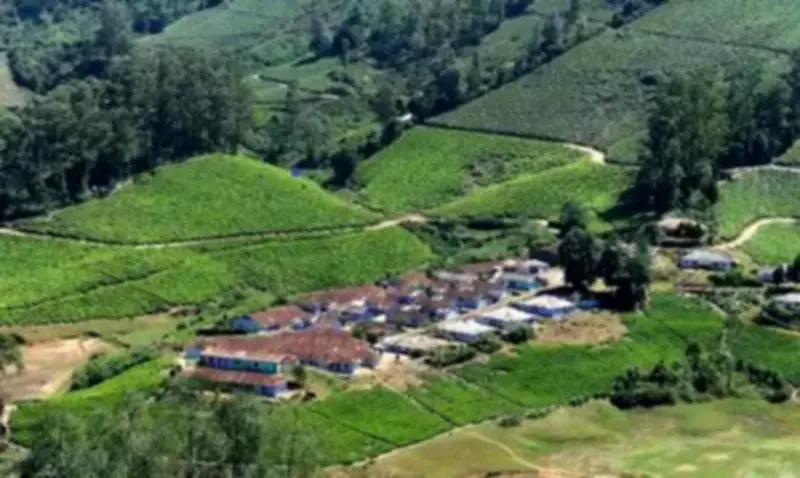
The Supreme Court has directed the Tamil Nadu government to initiate disciplinary and legal proceedings against 118 serving and retired government employees who have been identified as encroachers in the Srivilliputhur-Megamalai Tiger Reserve (SMTR). The court also instructed the state to consider recovering environmental restitution charges from these individuals for the purpose of ecological restoration.
Court's directive on encroachment
On May 29, the court issued these directions after reviewing reports submitted by the Central Empowered Committee (CEC). The CEC had found that 4,601 individuals had encroached upon 5,072.653 hectares of reserve forest land across the Megamalai landscape in Theni district. Additionally, the CEC reported that 116 government and public utility structures had been built inside forest areas without mandatory approvals. It also identified 12 private resorts in Megamalai, of which three were operational and three were partially operational.
Bench's observations
A bench comprising Justices Vikram Nath and Sandeep Mehta noted that while the measures initiated by Tamil Nadu were a step in the right direction, they remained "significantly below the threshold of response that the gravity and urgency of the situation demands." The bench added that the state's efforts to remove encroachments continued to remain "in the realm of hollow promises."

Eviction plan and timelines
The court directed the state to prepare a division-wise eviction plan with measurable milestones and present it before the CEC within one month. The plan should cover physical eviction, rehabilitation wherever applicable, legal proceedings against violators, and ecological restoration of recovered land. The court ordered that all government establishments and public facilities functioning within forest areas be relocated or removed within six months. It also directed the immediate closure and dismantling of illegal resorts and commercial tourism operations in Megamalai, along with disconnecting power supply and unauthorized transmission lines serving such properties.
Moratorium and prohibitions
The bench imposed a moratorium on extending welfare schemes, transport facilities, electricity supply, and infrastructure support within encroached forest areas. The order also prohibited approval of new non-forestry activities across the Agasthyamalai landscape until encroachments are removed and illegal infrastructure is dealt with under applicable laws.
Encroachment statistics
According to official records placed before the court, Varusanadu accounted for 2,523 encroachers occupying 3,758 hectares, followed by Gandamanur with 1,725 encroachers spread over 510 hectares.
Compliance monitoring
The court directed the state to submit monthly compliance reports to the CEC, which will continue ground verification and file quarterly status reports until all directions are implemented.






